
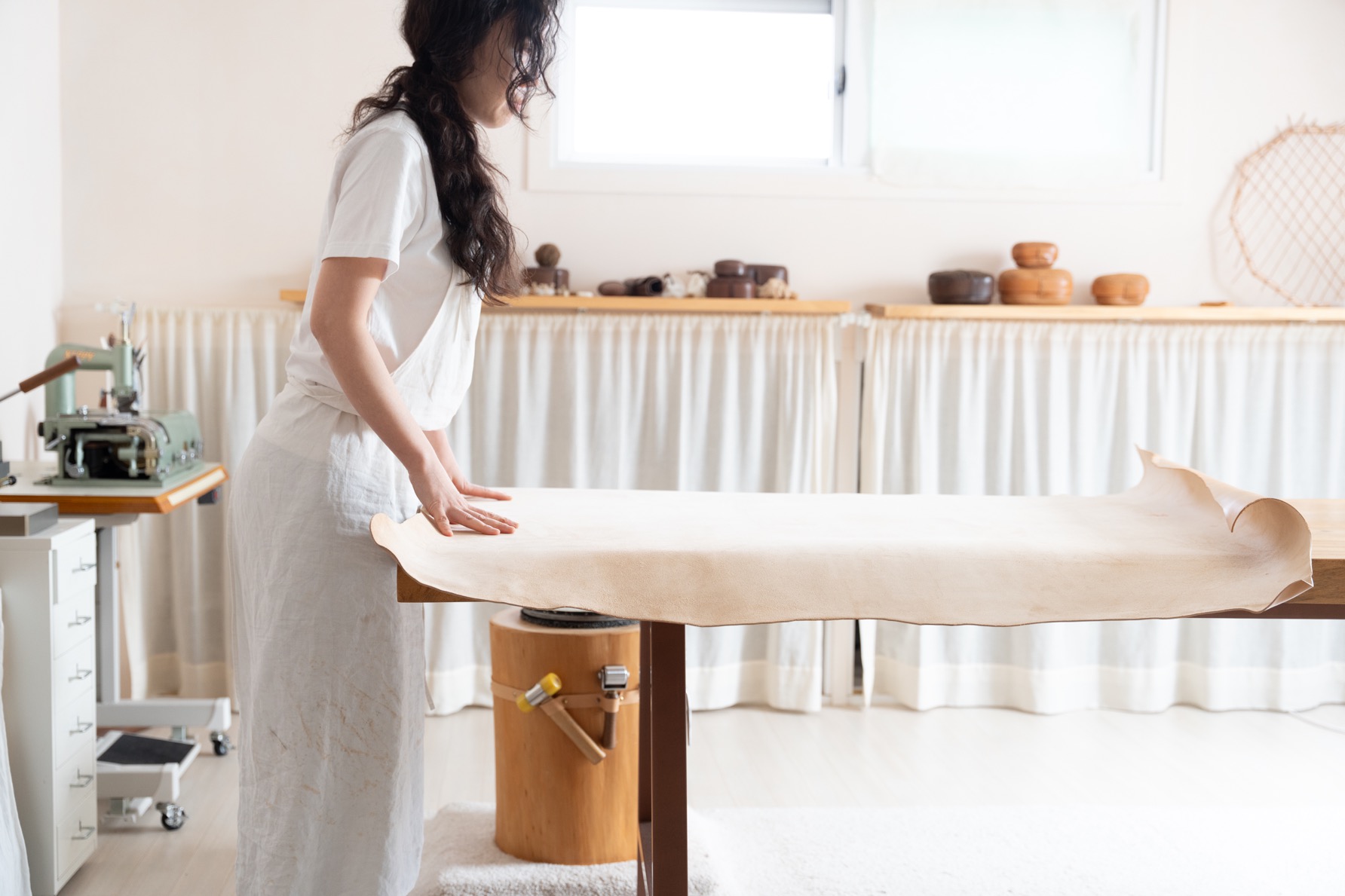
DEBAROUN is the name of Dahyeon Yoo’s former brand. It combines “DEBA,” meaning “to move forward by following the feel of the hands,” and “ROUN,” a Roman-alphabet rendering of the sound of a Korean word meaning “-like” or “characteristic of.”
The Artist’s Perspective Ahead of Her First Solo Exhibition in Japan
- This is your first solo exhibition in Japan. Korean and Japanese craft cultures share some similarities. Are there aspects of Japanese craft that you personally feel a connection with?
-
Dahyeon Yoo (D)
I am drawn to the wabi-sabi aesthetic found in Japanese craft. I feel a deep affinity with the quiet beauty of engaging with the essence of things, even when they are neither ornate nor perfect, and with the beauty that develops over time. I am also drawn to how this aesthetic naturally extends beyond craft into everyday life, shaping our relationship with objects and our approach to using them over many years.
-
- Is there a particular work in this exhibition that you would especially like visitors to pay attention to?
-
D
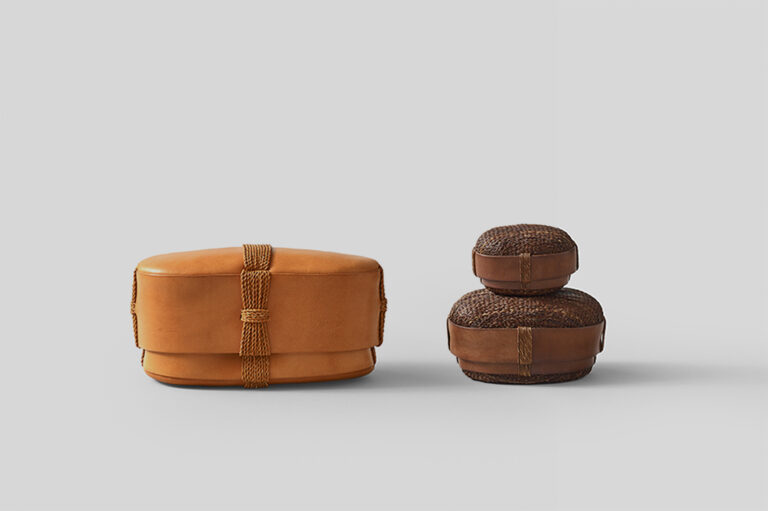
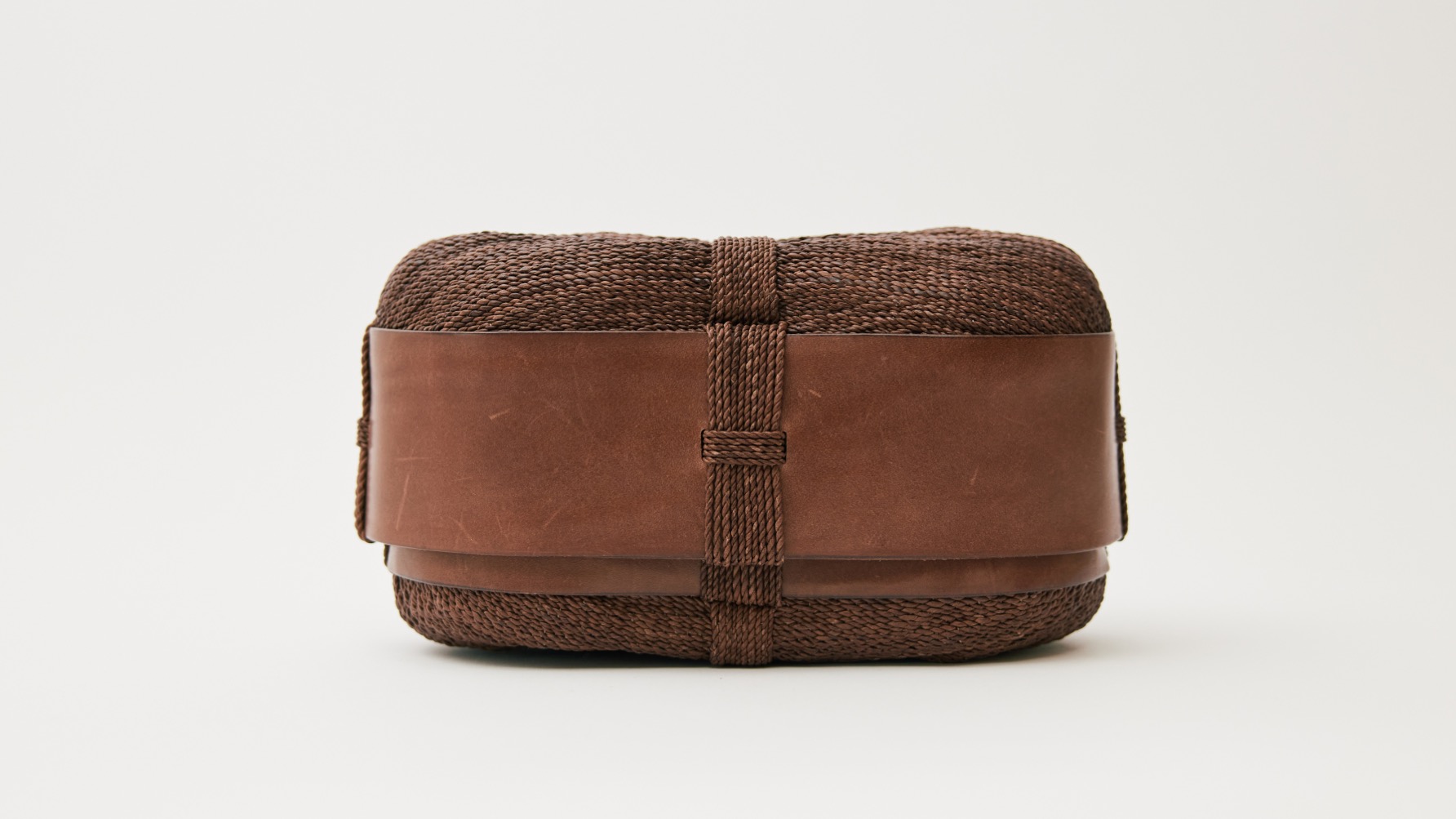
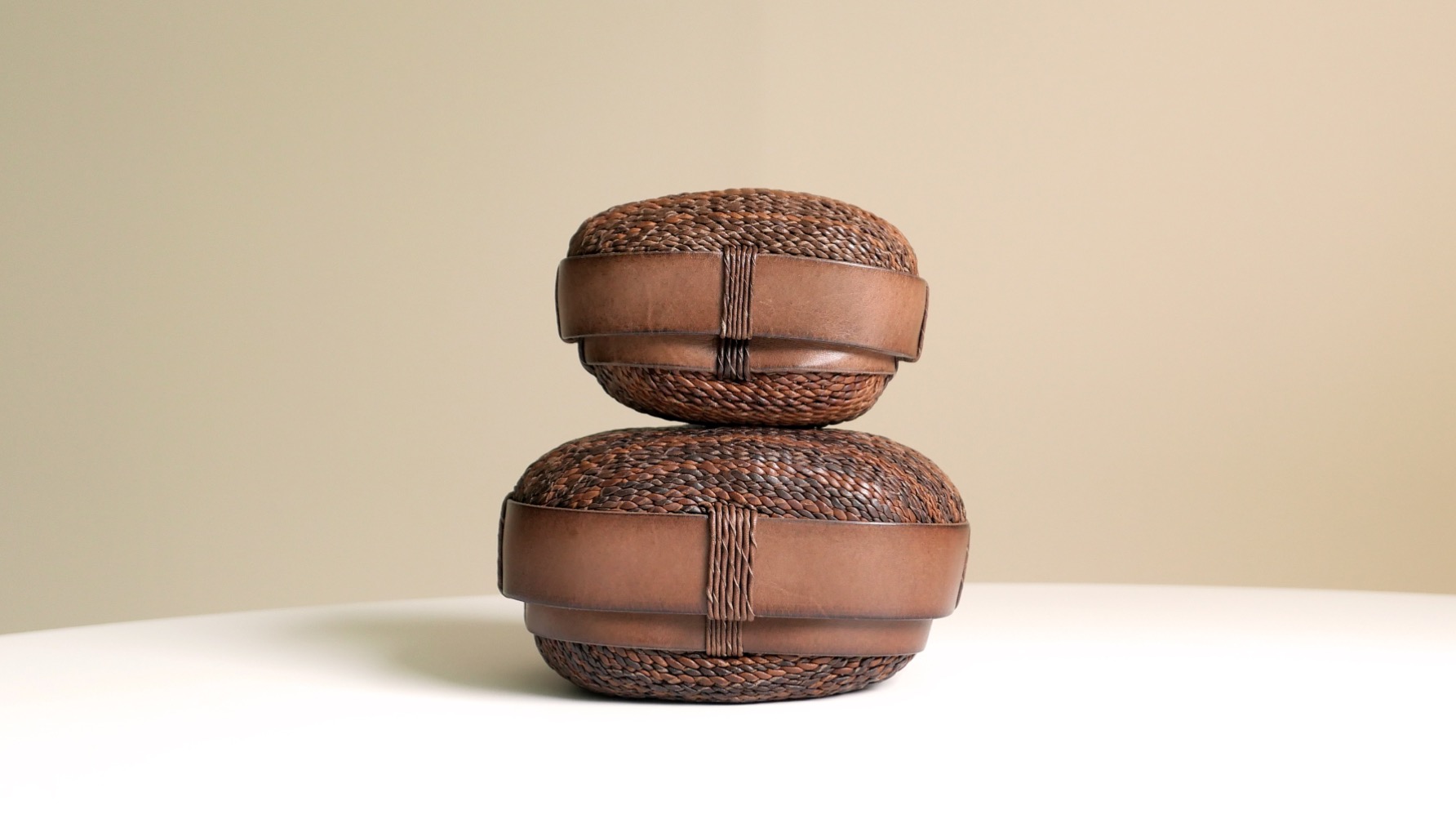
The Jurumak series. Created specifically for my solo exhibition at ARTS&SCIENCE, these works best express where I stand today and what I am contemplating as I create. They express the structure of Jurumak, a traditional Korean object used in daily life, through the Bakdawi technique, which has become an important language in my work.
-
- What is the most important thing you want to convey through your work?
-
D
When individual strands, each imperfect in its own way, support one another and are tightly woven together, they create a beauty that is not easily unraveled. This strong bond is what I want to convey.
-
From the Digital World to Craft
- Could you tell us a little about your background? I understand that you experienced burnout while working as a CG effects artist before turning to craft. What prompted the change?
-
D
When I worked as a CG effects artist, I was fascinated by creating things that did not exist in reality. But after working in the digital world for so long, I think I eventually began to feel an instinctive pull toward its opposite: the analog world. Around that time, I also felt that I needed to step away for a while. My husband, who worked in the same industry, and I both left our jobs and set off on a yearlong trip around the world. I have always valued experiences, so we set off without deciding what we would do when we returned. It was an irreplaceable time, when I felt as though I had thrown my whole self into the world.
By the latter half of the trip, I naturally began to feel that I wanted to turn to analog work next, and I thought of leather, which I had always loved. After returning home, I began working with leather in 2019, marking the beginning of the work I do today.
-
- Of the handcrafts you encountered on your travels, what experiences have influenced your work today?
-
D
It is difficult to single out any one experience. As I traveled through different parts of the world, I visited museums and sought out Indigenous crafts that had been passed down in different regions. I encountered a wide range of cultures and art forms, not just crafts. As I explored traditions around the world, I found myself looking instead to the traditions of Korea, my own roots.
Another memory that has stayed with me is a visit to a small knitting museum in Iceland toward the end of the trip. There, I suddenly wondered about the warmth that might come from combining leather and knitting. At the time, it was just a vague idea, and I never imagined it would lead to the work I do today. Looking back, what I find interesting is that Korean straw and grass crafts came to take the place I had imagined for knitting. Eventually, while remaining rooted in Korean tradition, I began weaving leather.
-
Straw Meets Leather: The Weaving of Bakdawi, a Traditional Craft
- What outlook on life and aesthetics have you learned from Korean mingei (folk crafts)?
-
D
I believe Korean mingei embodies a simple yet refined beauty that arises naturally from the ordinary moments of daily life. I am drawn to the fact that, even when things are not perfectly finished or polished, they have a relaxed openness and a distinctly human warmth. Through this, I have come to think that life, too, is not about making everything perfect or having everything go exactly as we wish, but about accepting the nature of what we are given, supporting one another, and taking the time to weave a lasting balance.
-
- Why were you drawn to the straw and grass crafts of the Joseon period?
-
D
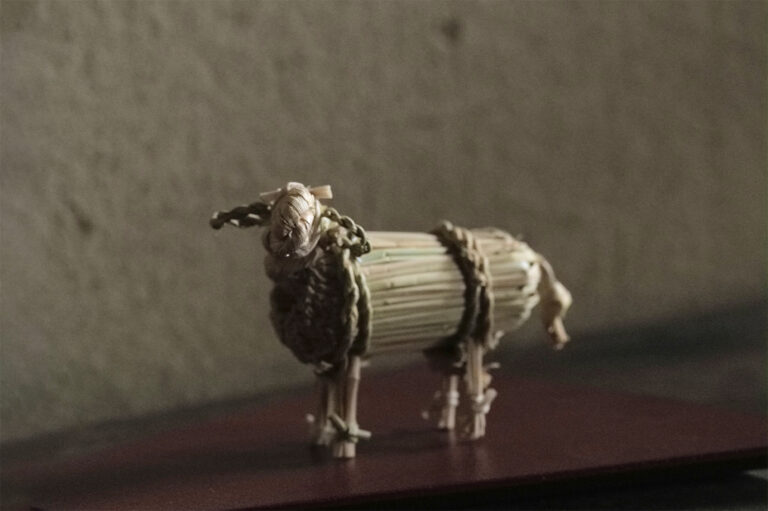
What appeals to me is the wisdom of using natural materials close at hand without waste, transforming them into things needed for everyday life. I also admire the structures devised and developed by anonymous makers in response to the needs of daily life, and the beauty that, without being showy, remains true to its essence and function. When I take time to look closely at everyday objects made by hand, through weaving alone, before industrialization, I sense a profound wisdom that is not easily replicated today. This was an era without machines or tools like those we have now. It is a wisdom rooted in an understanding of materials drawn from nature, using only what is needed, and refined over time through everyday life. Through these crafts, I am learning not only traditional techniques, but also the very approach to daily living of the people who lived in close relationship with nature and materials.
-
- Why did you decide to express the Joseon-period craft of bakdawi in leather?
-
D
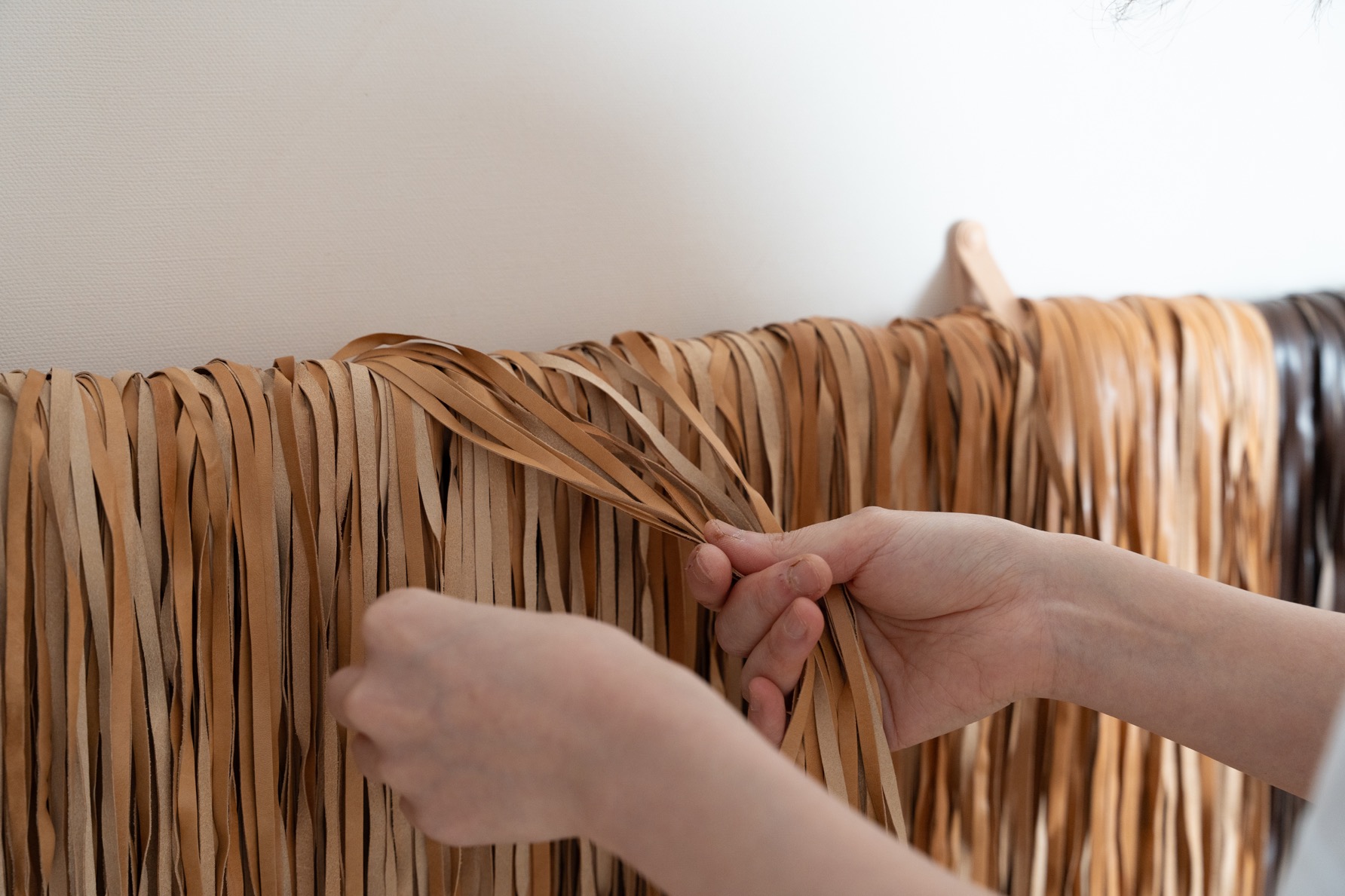
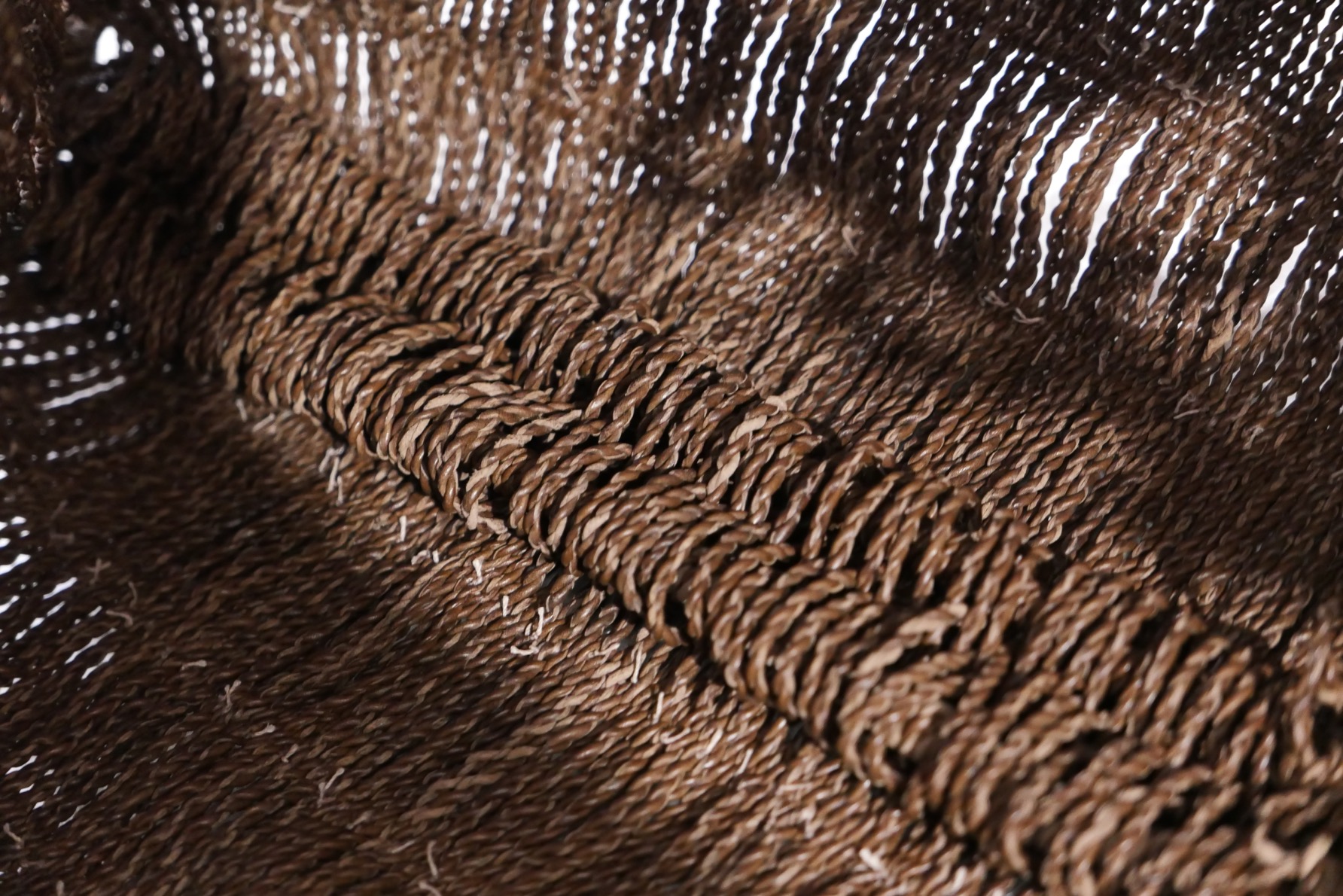
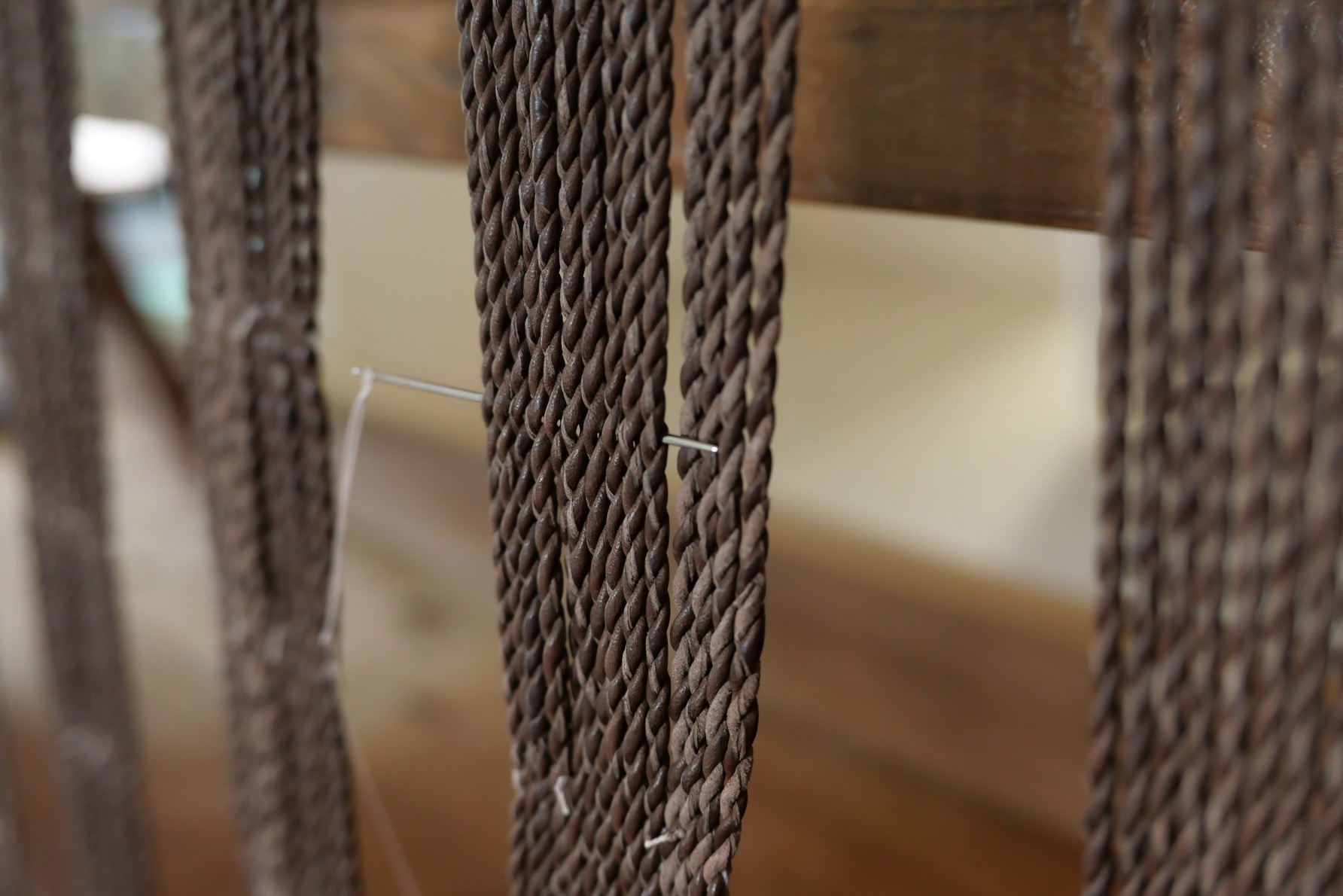
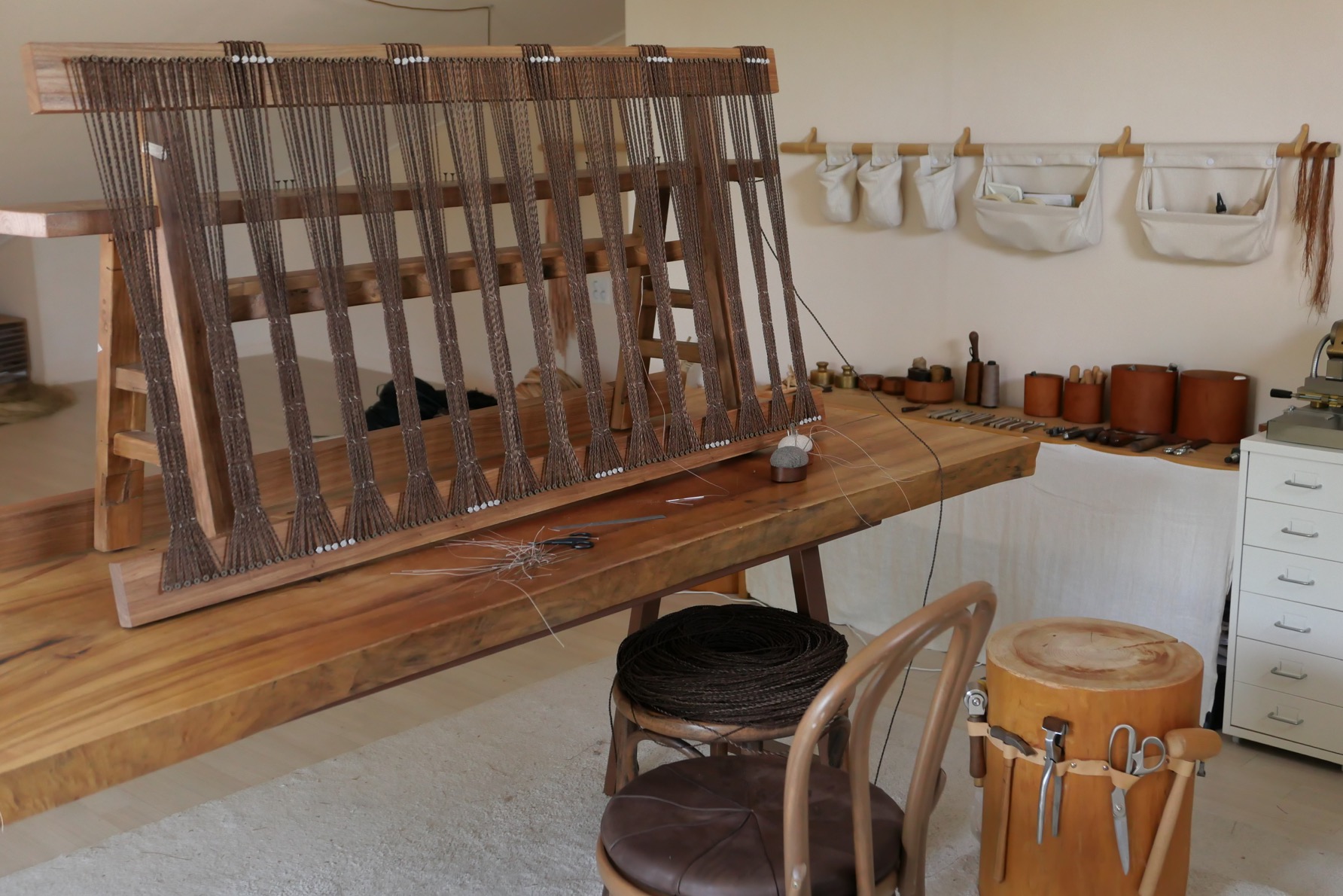
I have worked with leather and used saddle stitching for many years. Saddle stitching is a hand-sewing technique in which a single long thread passes through the same hole, crossing as it goes, to join the leather securely. Bakdawi, a traditional straw-and-grass craft, has a similar structure: a single long weft passes between pre-twisted warp cords, crossing at the same points to bind them together. Recognizing this similarity made me want to express the principle of bakdawi in leather, the material I understand best. Leather can be cut into narrow strips and twisted into cords, and it can withstand the friction and pressure that arise during weaving. Over time, it also bears the marks of handling and acquires depth. I also took an interest in bakdawi’s original function. It was once used as a cord for shouldering and hauling heavy loads, and also served as a back strap. For me, leather is therefore not simply a substitute for grass or straw, but a material that can connect the structural principle and function of bakdawi with a contemporary sensibility.
-
- What approaches do you take when working with this technique?
-
D
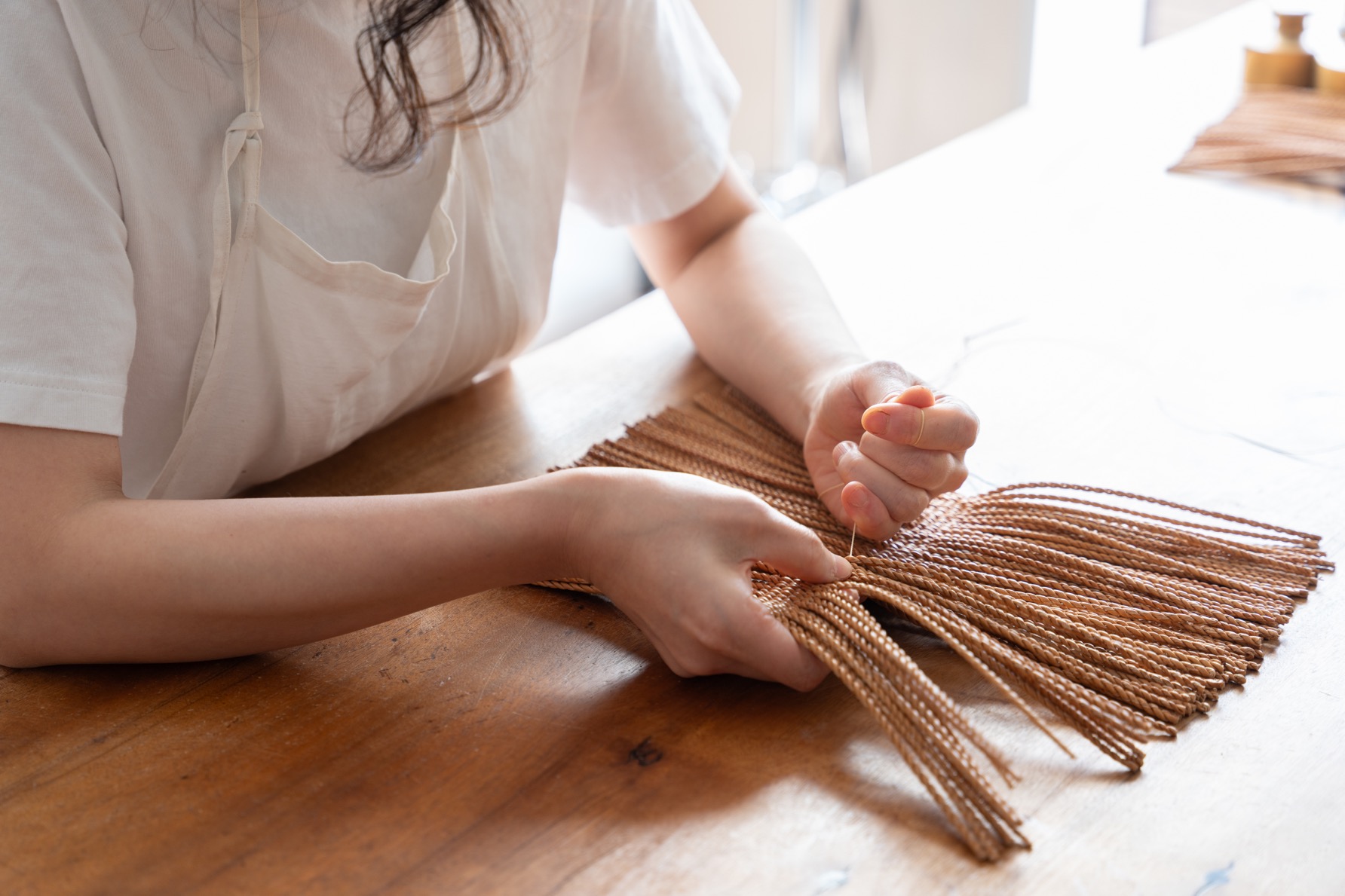
I continue to research ways of extending the bakdawi technique to different forms and uses. Even when the works differ in form, I place importance on allowing the structure and characteristics of bakdawi to emerge naturally, while keeping the individual works connected to one another. The Jurumak series presented in this exhibition incorporates not only the woven structure of bakdawi, but also its original function as a strap.
-
- Why do you continue to choose leather as your material?
-
D
Vegetable-tanned leather is supple and soft to the touch, but hardens when it gets wet and dries. It is durable, while also naturally bearing the marks of time. In my studio, there are works whose colors and appearance gradually deepen over the years. From time to time, when I look at pieces I made in the past, I find that they have taken on a different appearance from when they were first made, and that their beauty has gained depth. For now, I have yet to find a better material.
-
Time Nurtures Materials, and Nurtures Life and Value
- Please tell us about the idea that “value emerges over time.”
-
D
For me, time is the process through which things build up within a work. As materials come into contact with light, air, and human hands, they gradually acquire colors and character all their own, while traces of people and memories accumulate as well. I believe that, as the time during which the materials themselves develop greater depth intersects with the time of people’s everyday lives, a beauty and value emerge that the work did not possess when it was first made. That is why, rather than focusing on the moment of completion, I strive to create works that can embrace the passage of time that follows.
-
- What do you keep in mind when creating products that can be used for a long time?
-
D
I want to create forms that are not swayed by changing trends. I am drawn to simple, essential forms that one can look at for a long time and keep close without growing tired of them. I also hope that, even as the materials change over time, those changes will harmonize naturally with the work.
-
- Do you have a favorite tool that you have continued to use for many years?
-
D
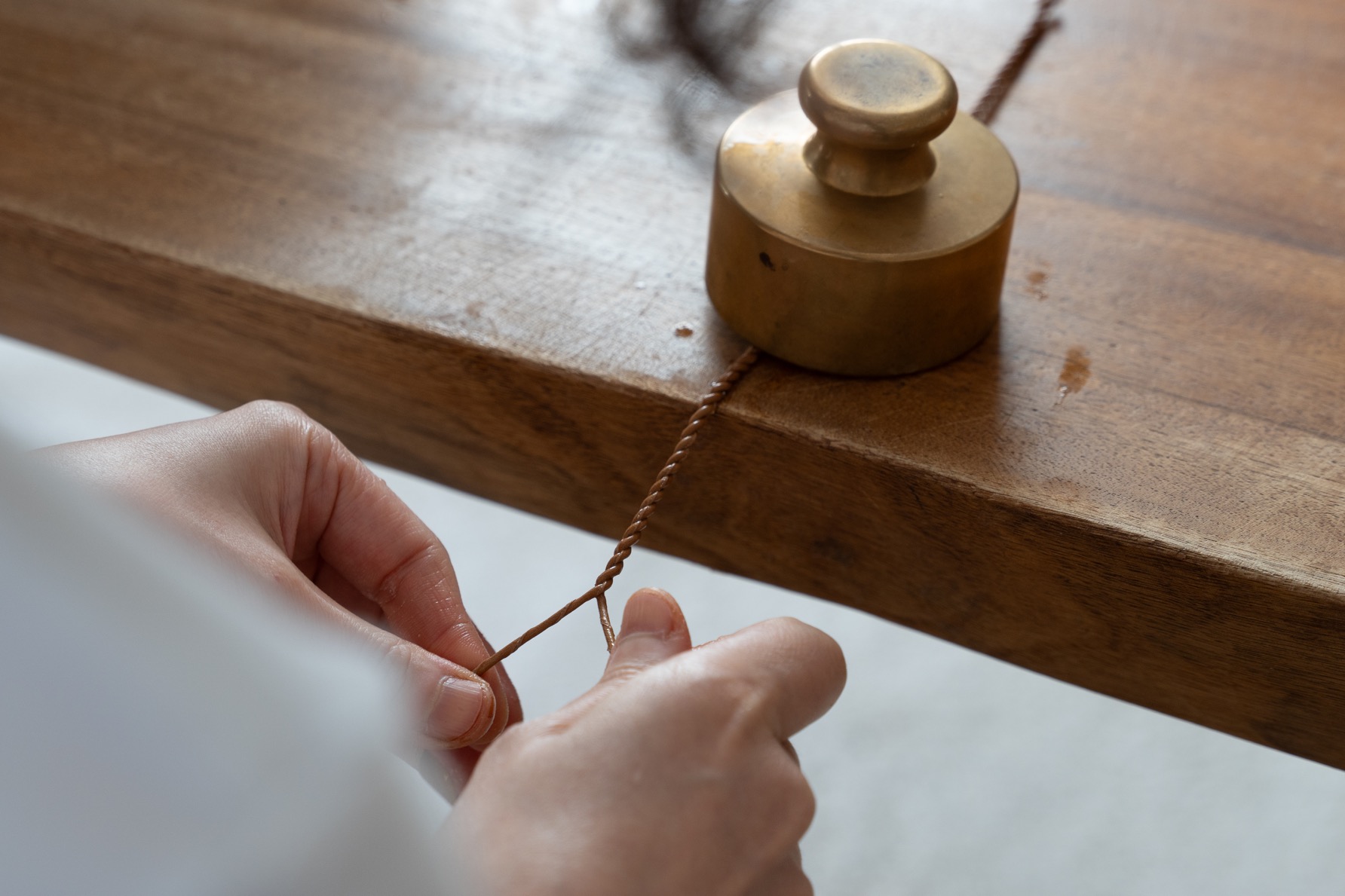
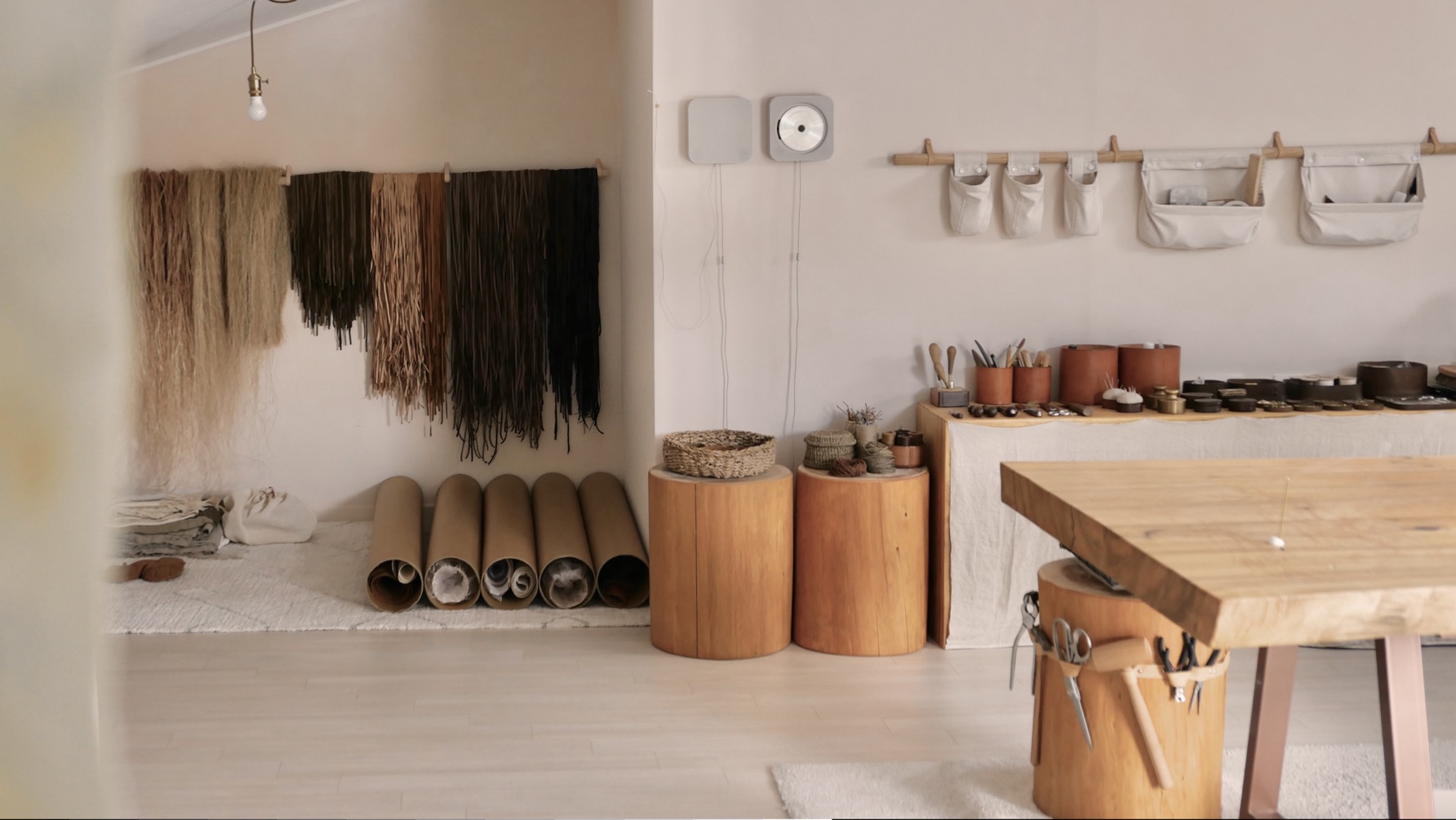
I have a brass weight that I have used for many years. It was originally a tool for holding leather in place when cutting it, but I use it particularly often when making leather cords. Through years of handling it and using it in my work, its surface has become smooth and lustrous, and its look has taken on the character of an antique. I find the way it looks now very beautiful, as though it embodies the time I have devoted to my creative work over the years.
-
Knowing One’s Roots, Weaving the Future
- What was it like to be nominated for the LOEWE FOUNDATION Craft Prize?
-
D
It reassured me that the path I had taken was not the wrong one, while also allowing my work to reach a wider world. When I was working on my own, there were times when I felt uncertain or doubtful about the direction I was taking, but it gave me the strength to keep moving forward, trusting in the path I had chosen.
-
- Did standing on an international stage change the way you view your own work?
-
D
If anything, I began to look more deeply into my own roots. Encountering artists and works from many countries, I came to see that, rather than following global trends, it was important to understand where I come from and what I keep in view as I create my work. The more diversity I encountered, the more important it became to deepen and sharpen what is unique to me.
-
- How do you see the current state of Korean craft?
-
D
Korean craft is now attracting renewed attention from around the world and, I believe, is at a major turning point. It used to be introduced as “traditional and beautiful”; now the interest lies in how artists express their own roots through contemporary materials and sensibilities. At the same time, although interest from overseas has grown rapidly, the environment within South Korea for the ongoing collection and study of craft, and for supporting artists’ activities over the long term, is something we still need to develop together.
-
- What do you think is necessary to carry Korean traditional craft into the future?
-
D
I believe we must not simply consume tradition as material or imagery for creating something new. We need to respect the time and wisdom that have accumulated within it and engage with it responsibly. It is important to fully understand why certain forms and structures came into being, along with their underlying principles and cultural context, before connecting them anew through contemporary materials and sensibilities. In this way, tradition does not remain confined to the past, but forms connections with life today and is naturally passed down to the next era.
-
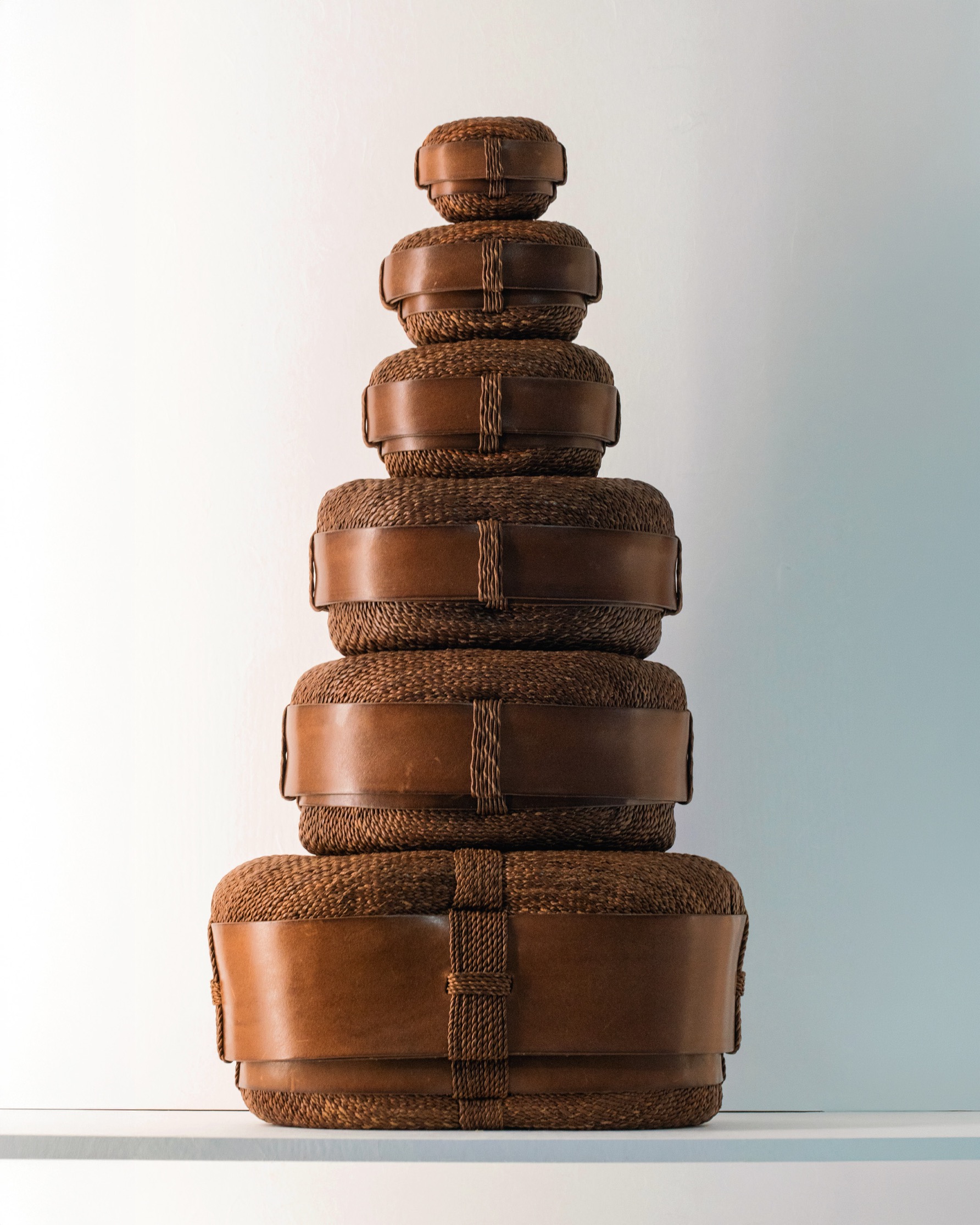
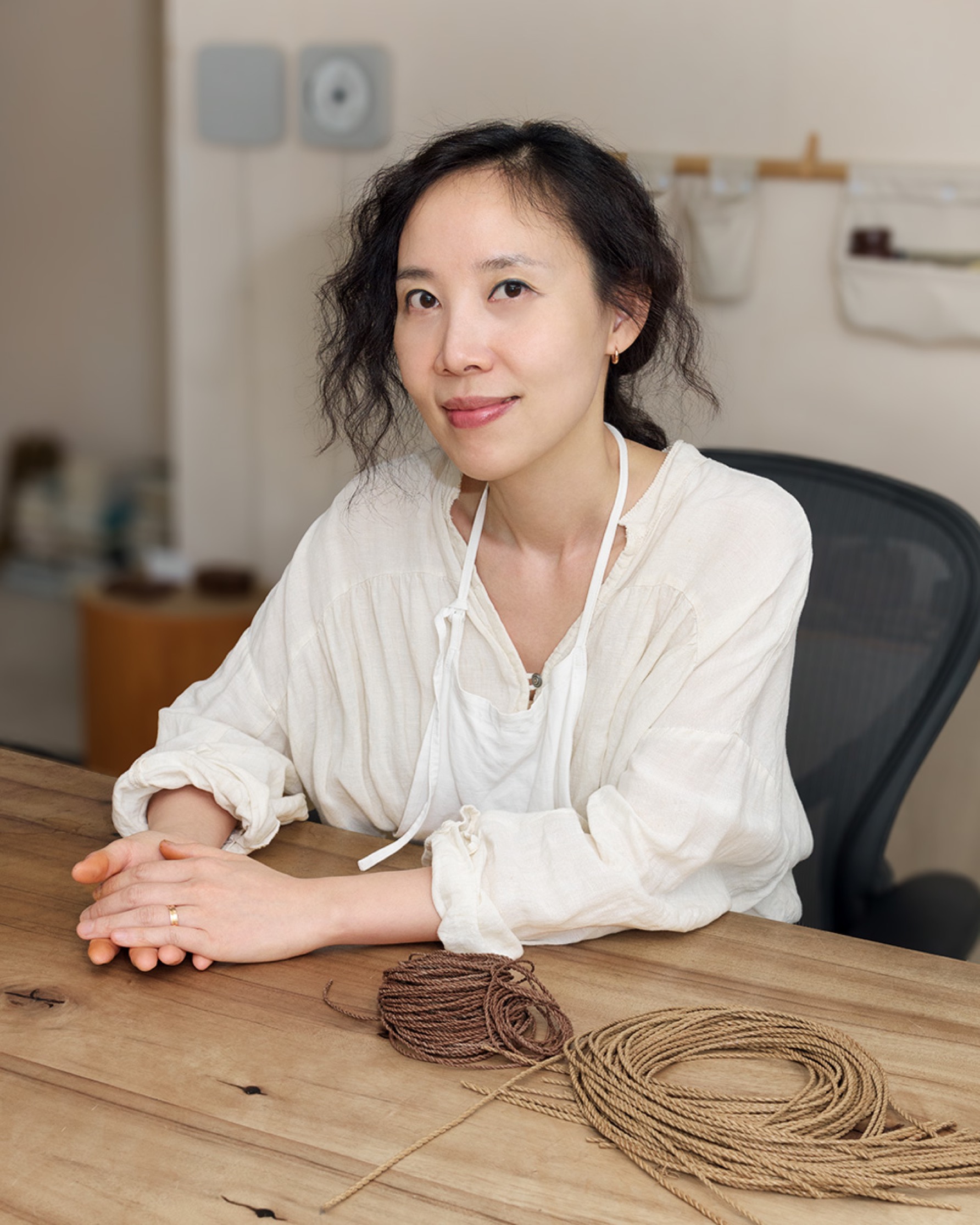
HIN / Arts & Science will hold the artist’s first solo exhibition in Japan, opening in Kyoto on Friday, November 6, and in Tokyo on Friday, December 4. The show will feature a wide range of work, including new pieces, works exclusive to the exhibition, and representative works. We invite you to take the opportunity to view the exhibition.
Further information on Dahyeon Yoo’s leathercraft exhibition Held in Balance can be found here.
PROFILE
Born in Korea in 1983, Yoo is an artist whose practice is rooted in leather and traditional Korean straw and grass crafts, exploring the relationships that form as materials are woven together. She began creating leather pieces in 2019 under the name “DEBAROUN,” and in 2024 was named a finalist for the LOEWE FOUNDATION Craft Prize. In 2025, her work was acquired for the V&A’s permanent collection. As the scope of her practice has expanded, she now works under the artist name “Dahyeon Yoo,” connecting the wisdom of traditional ways of life with contemporary forms.