

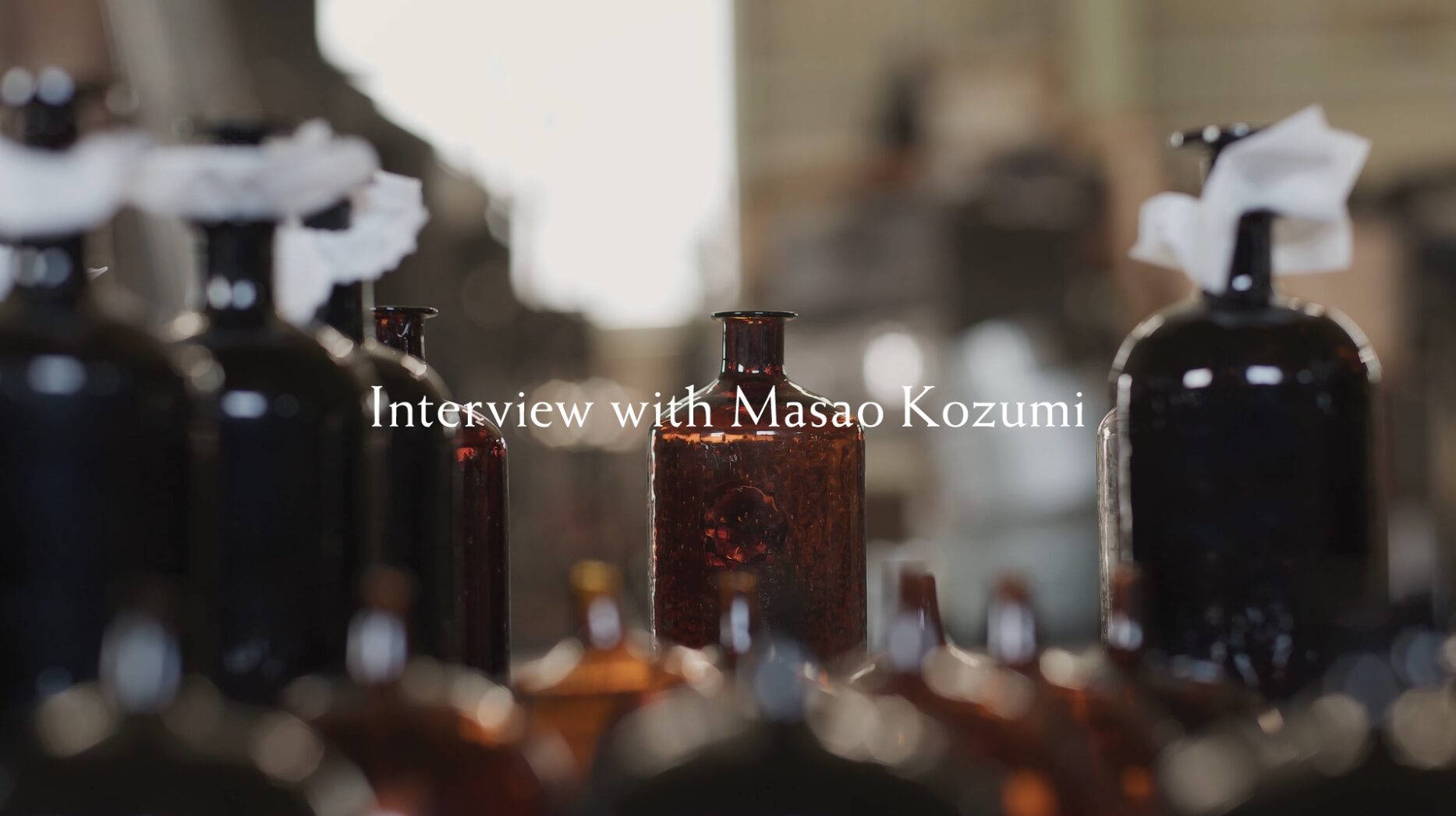

From a Kiln Nestled in the Mountains
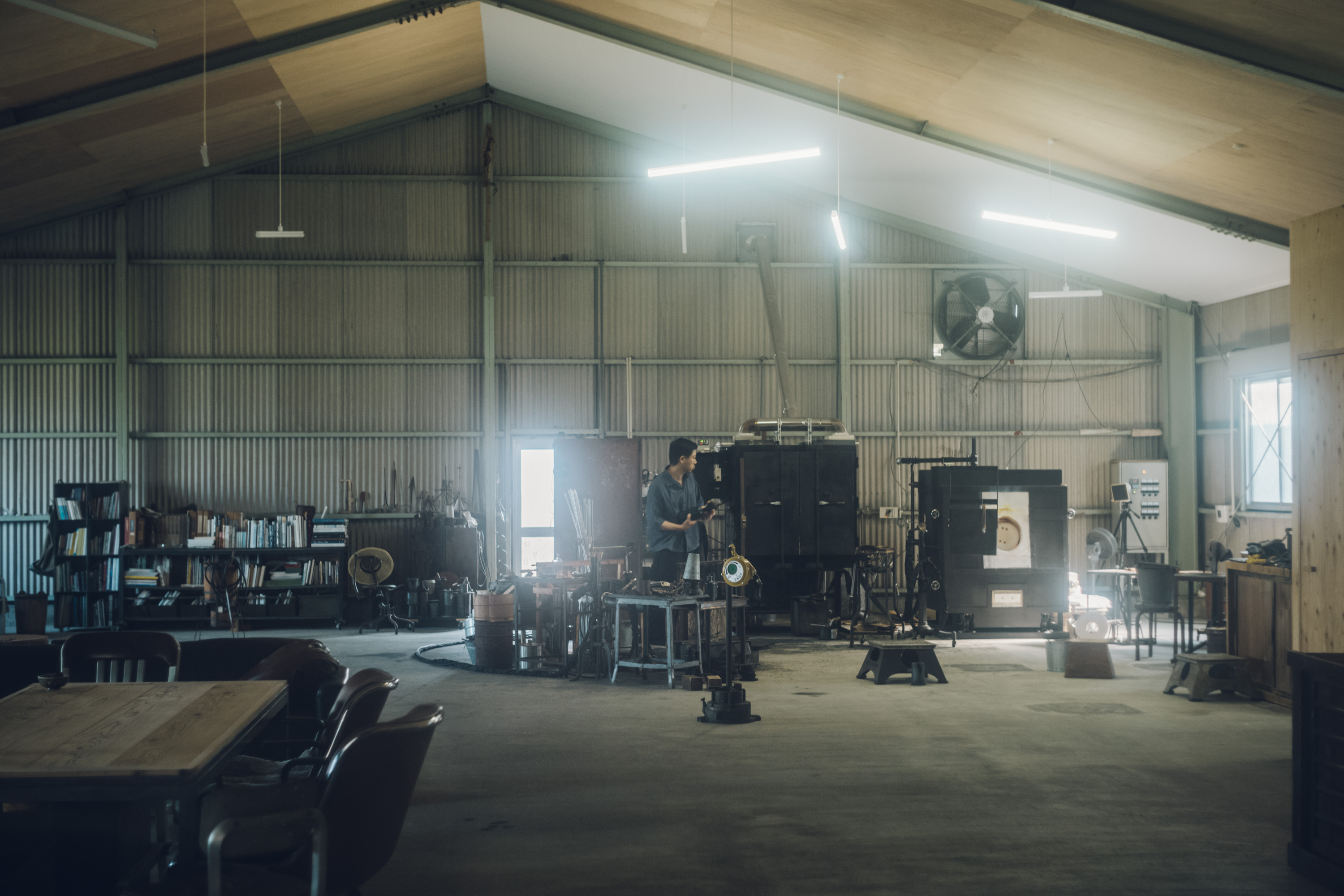
- It has been about ten years since you established your studio here in Gifu, hasn’t it?
-
Kozumi (hereafter, K)
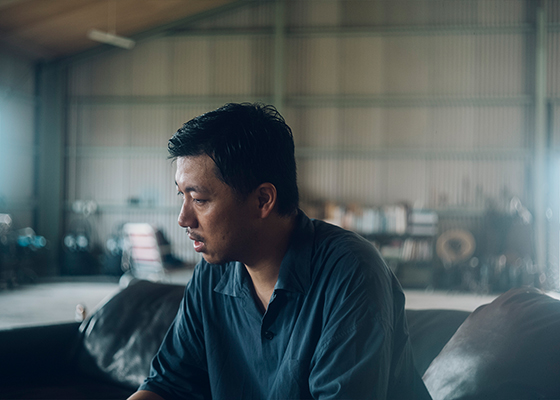
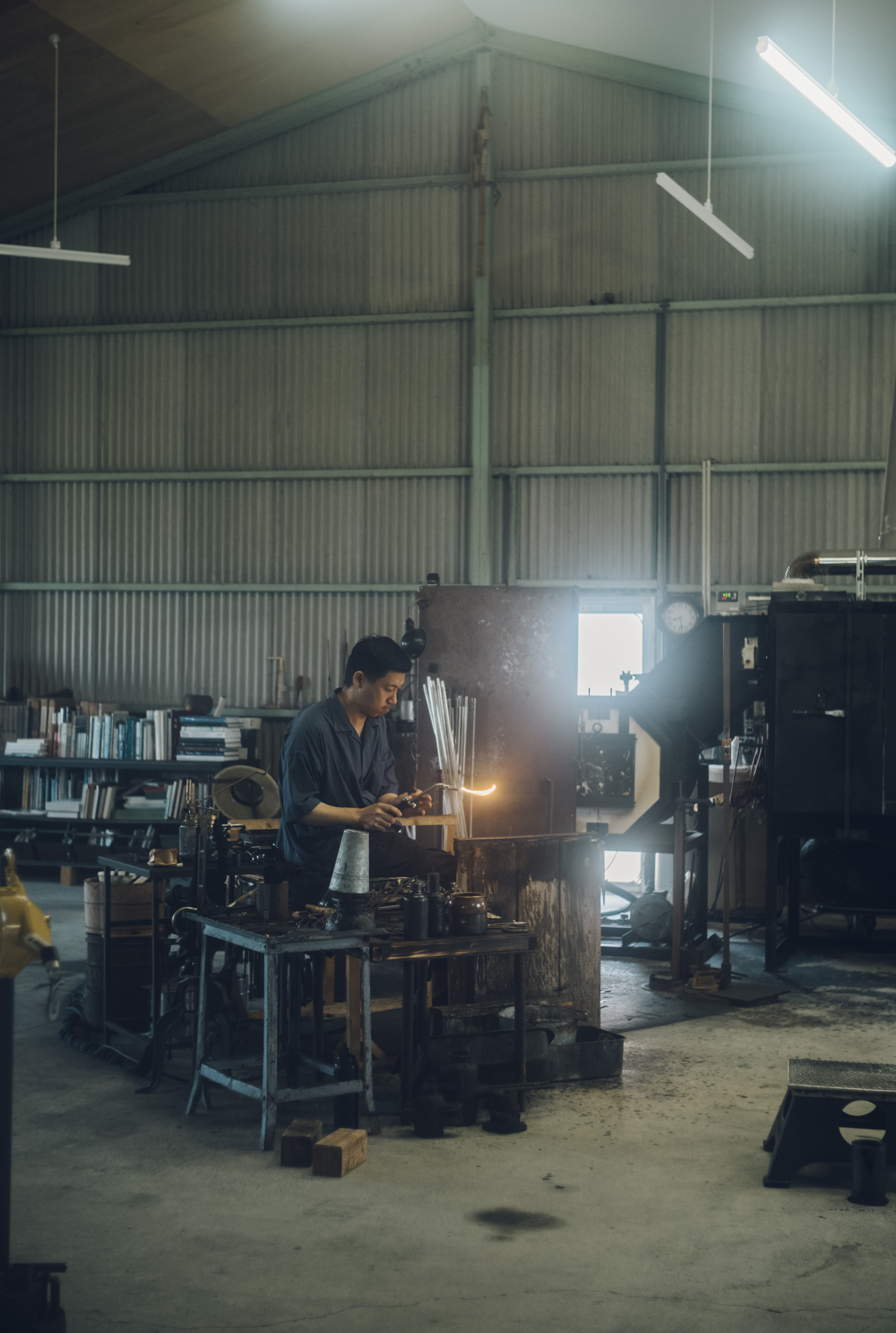
Yes, it’s been about ten years. Before that, I worked for around ten years in a town in eastern Toyama Prefecture, near the border with Niigata. At some point, I decided that I wanted to have my own kiln and started looking for a place. Because welding and metalworking are noisy, I wanted somewhere where the houses weren’t densely clustered. I spent nearly three years widening my search from within Toyama Prefecture to Kanazawa, Komatsu, Fukui, and beyond, and in the end, I happened to find this place online.
-
- Now that you’ve lived here, do you feel that the environment of this area has had any influence on you?
-
K
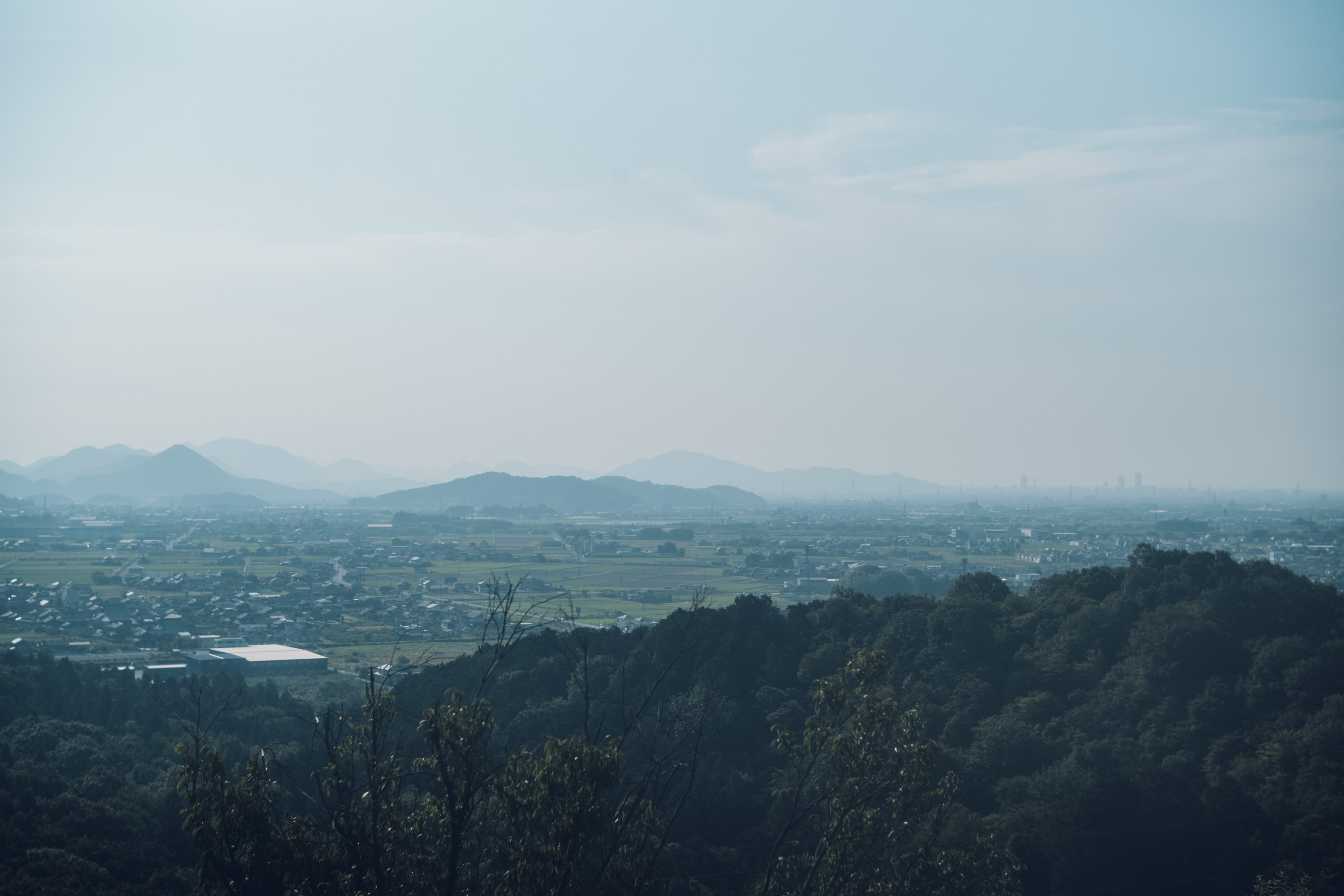
I’m originally from a very rural part of Kumamoto, and to be honest, I was never particularly fond of “the countryside.” So at first, I didn’t think I was being influenced by this place in my work. But as I’ve gotten older, when I open the window between tasks and see the mountains, I sometimes feel that perhaps this place has influenced me to some extent. It’s not as though I chose this place because I particularly like nature, but it is a very comfortable place to live.
-
Hands That Converse with Glass
- I understand there was a period when you reconsidered the glass itself as a material.
-
K
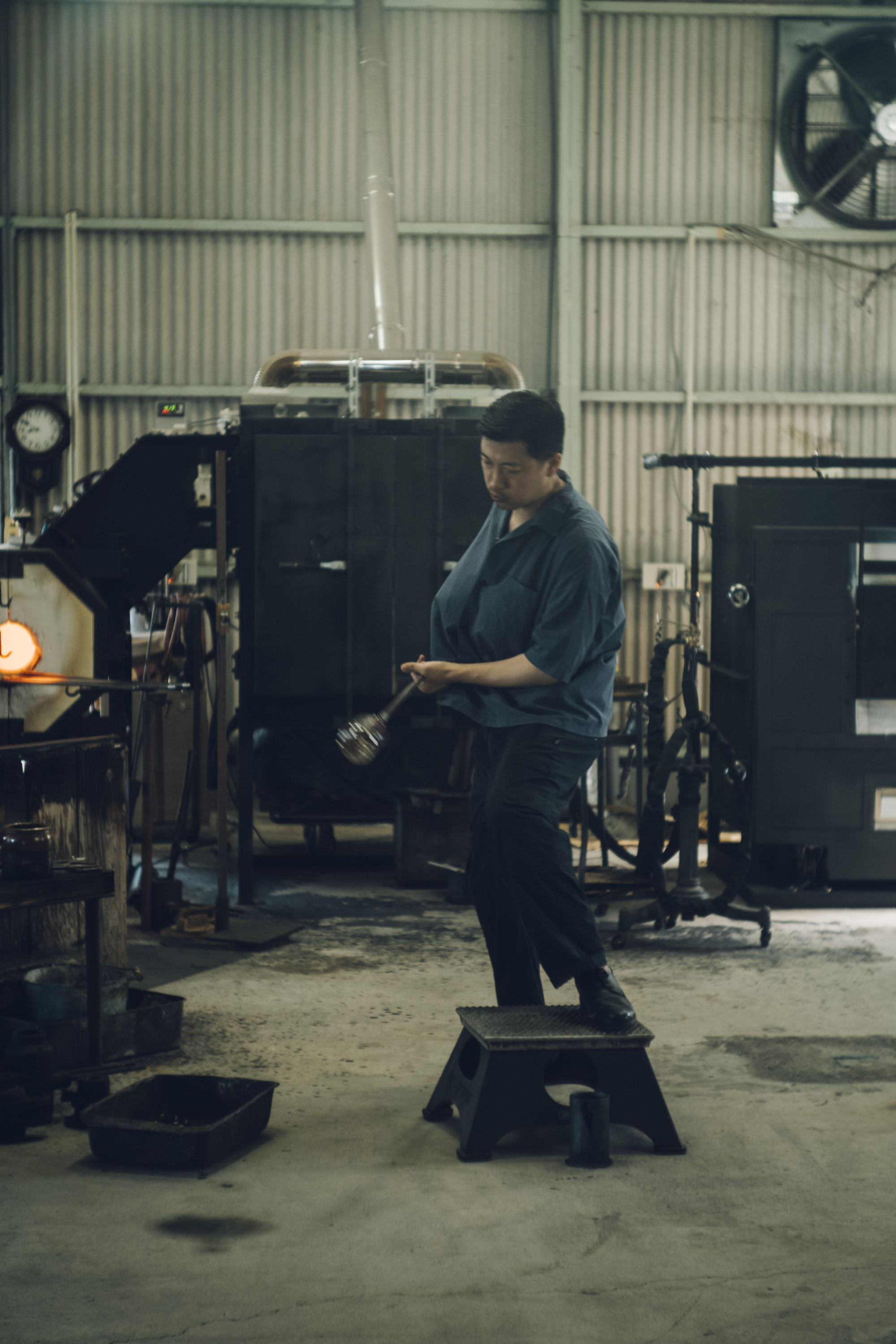
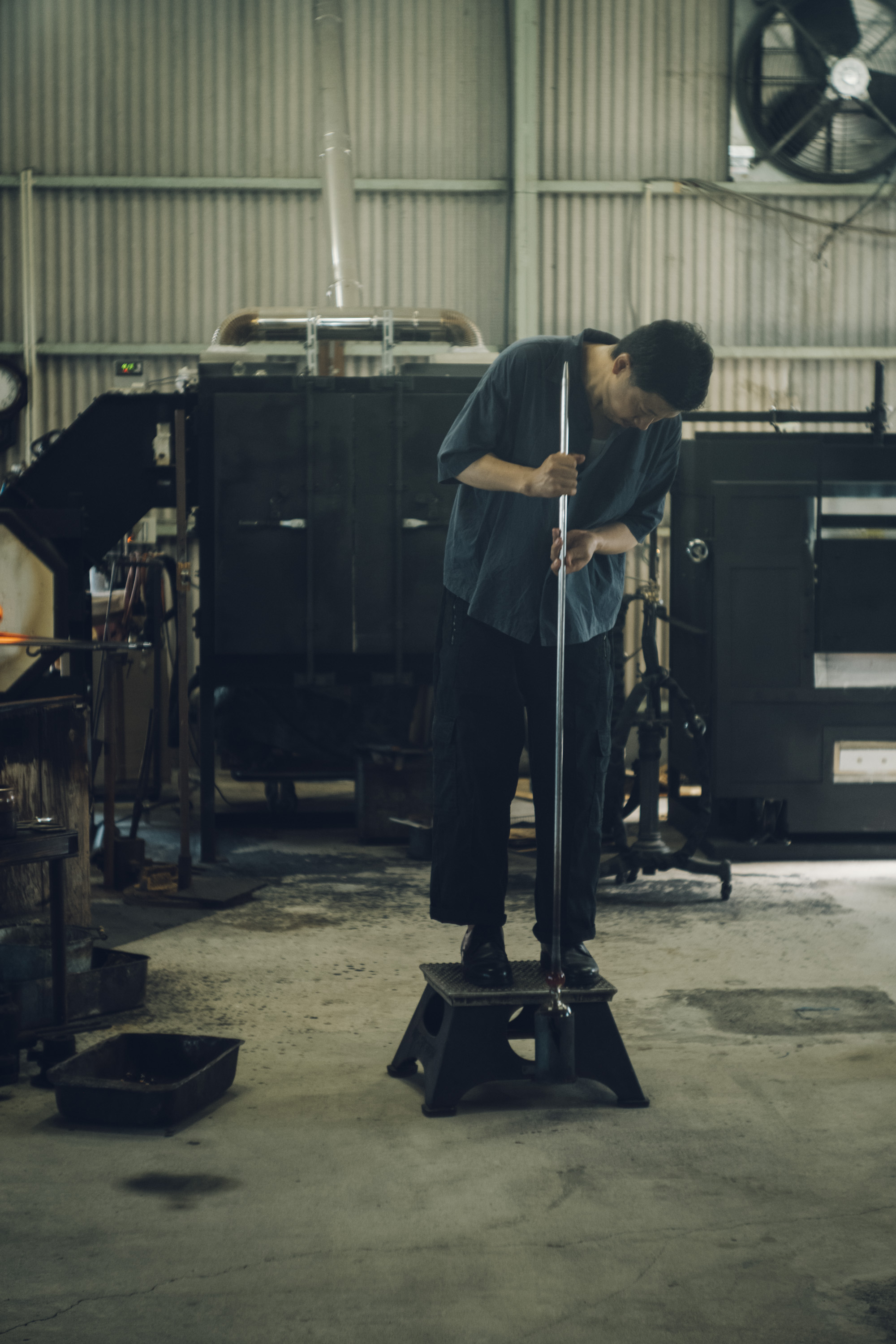
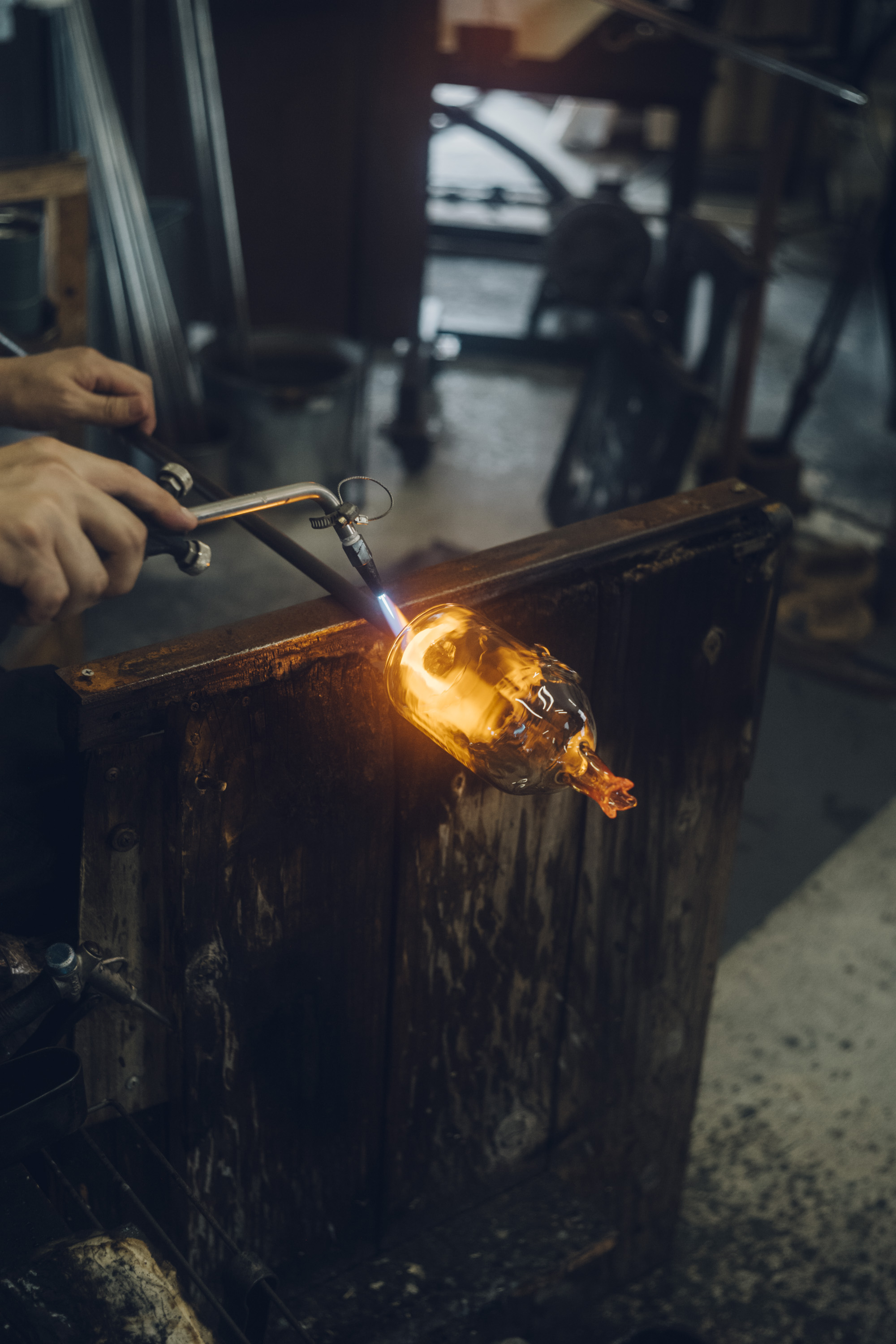
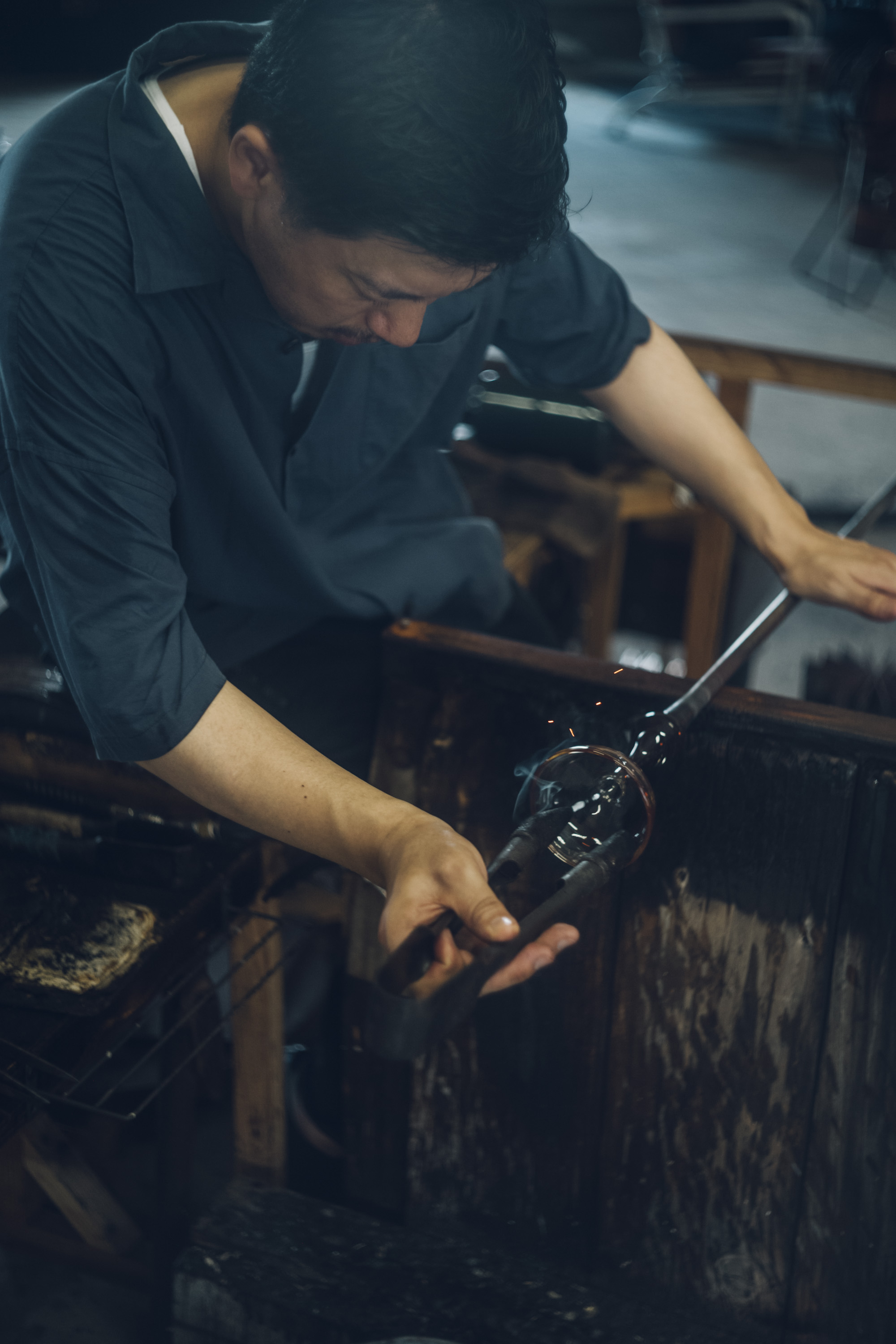
Originally, I used beautiful, colorless, transparent glass for craftwork, free of impurities. But with the “mold-blown” technique I wanted to work with, that glass took a long time to cool, and even when placed in the mold, its shape would immediately become soft and deform. I began wondering if there was a material that would cool quickly and set more firmly, and eventually arrived at a more industrial type of glass, closer to window glass or the glass used for bottles. I didn’t choose this material because I was drawn to its color or the character of its bubbles; it was simply the result of searching for a raw material that happened to suit what I wanted to make. I’m still experimenting, making small adjustments to the composition of the raw materials. This “mold-blown” technique itself is based on a method used in the Edo period.
-
- Could you tell us how you came to the technique known as “Edo-period mold blowing”?
-
K
It began when the owner of a gallery looked at my work and described it as “Japanese glass.” Until then, I had never consciously thought about “Japan” in my work; rather, much of what I was making involved transposing the forms of Joseon-period ceramics into glass. I wondered, “Japanese glass…?” and, as I began researching it, learned that there had been a period when Japan had a very distinctive glass culture of its own. That was the glass of the Edo period. I had assumed that mold blowing at the time was simply one of the techniques used for mass production, but when I actually tried it myself, I couldn’t manage it at all. I could make a hundred pieces without getting even one right. That was when I realized that, compared with mold blowing after the Meiji period, it wasn’t just the technique that was different—the way of thinking itself was different. Edo-period glass was made from a material containing lead and was melted using charcoal. It is completely different from the conditions under which I work today, but I make things while imagining how the craftsmen of that time would have worked.
-
- I understand that the new works in this collection take vials as their motif.
-
K
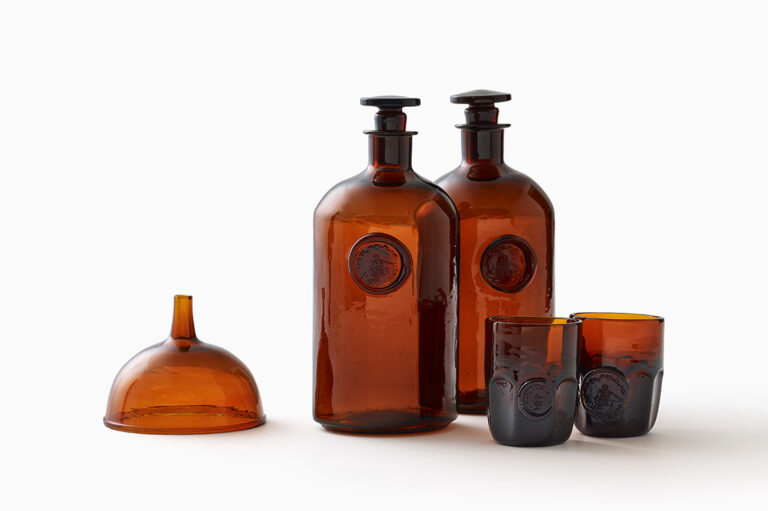
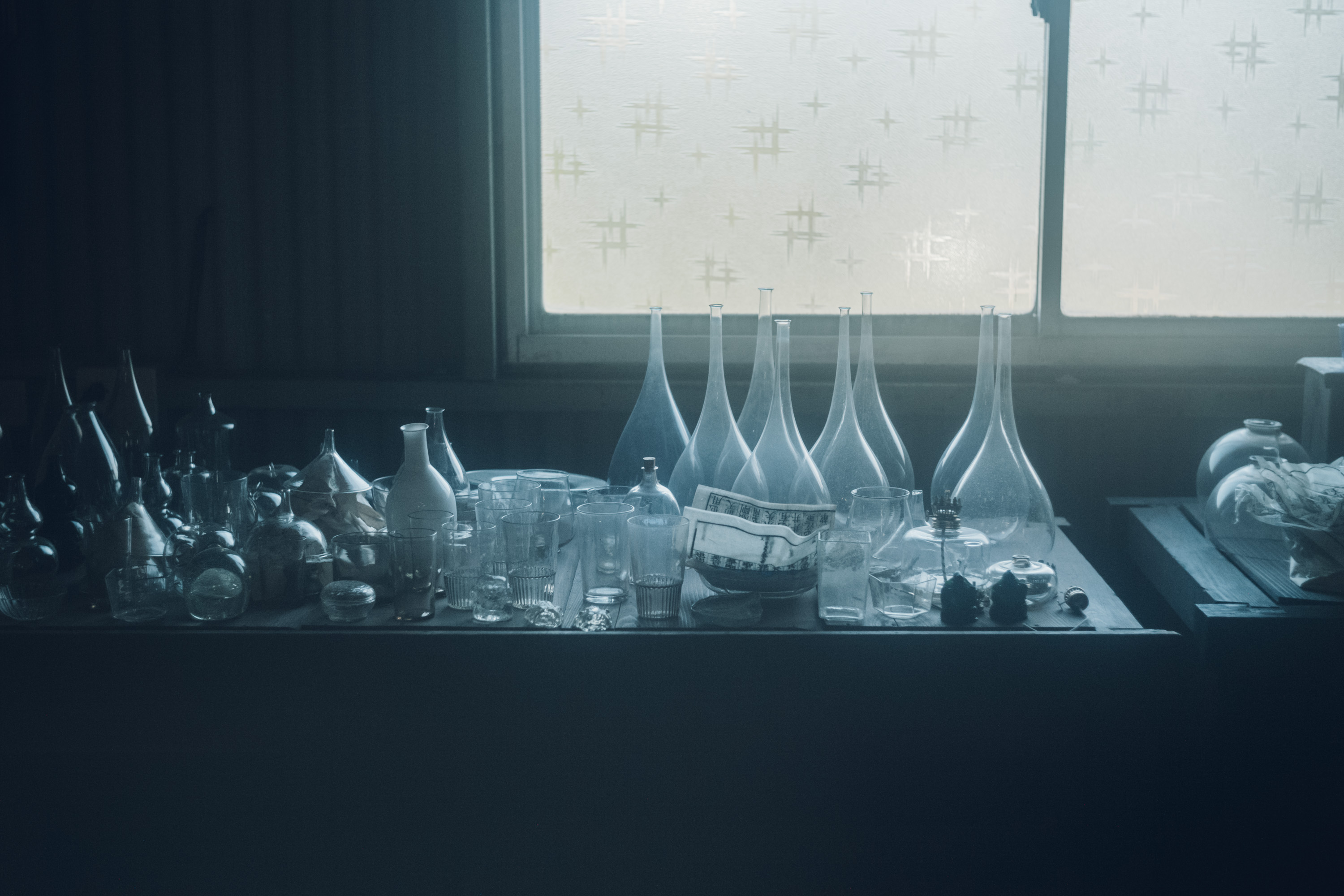
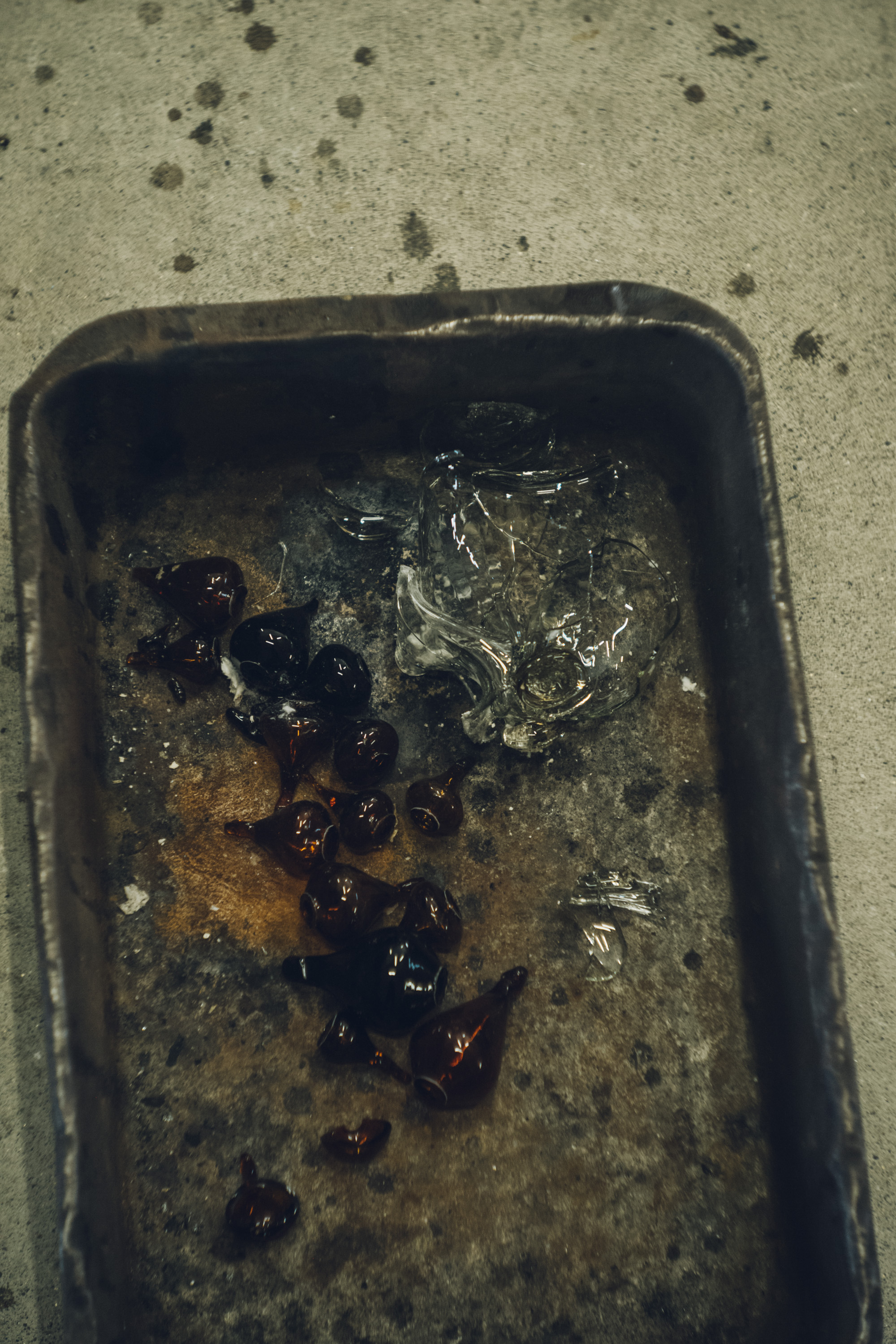
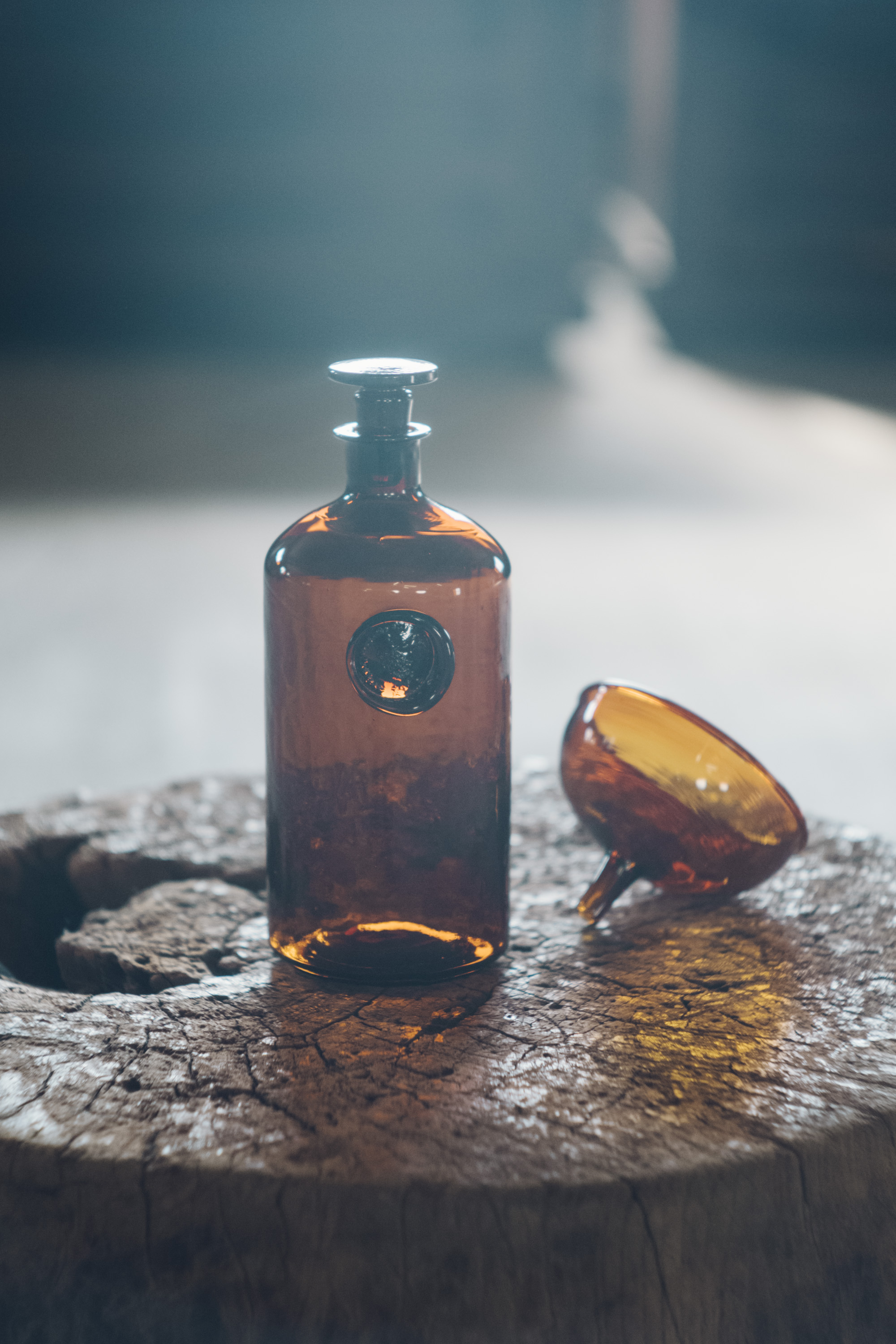
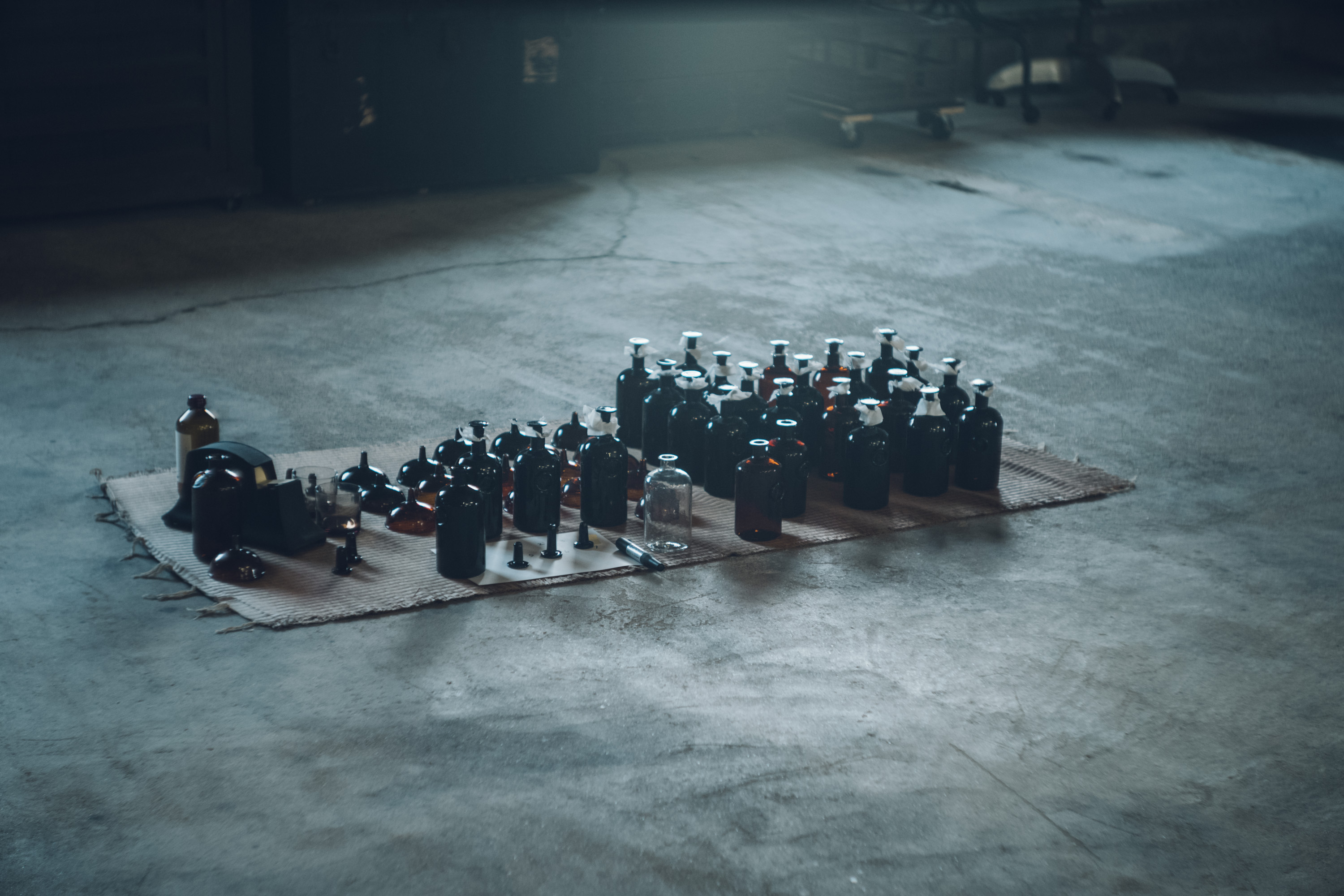
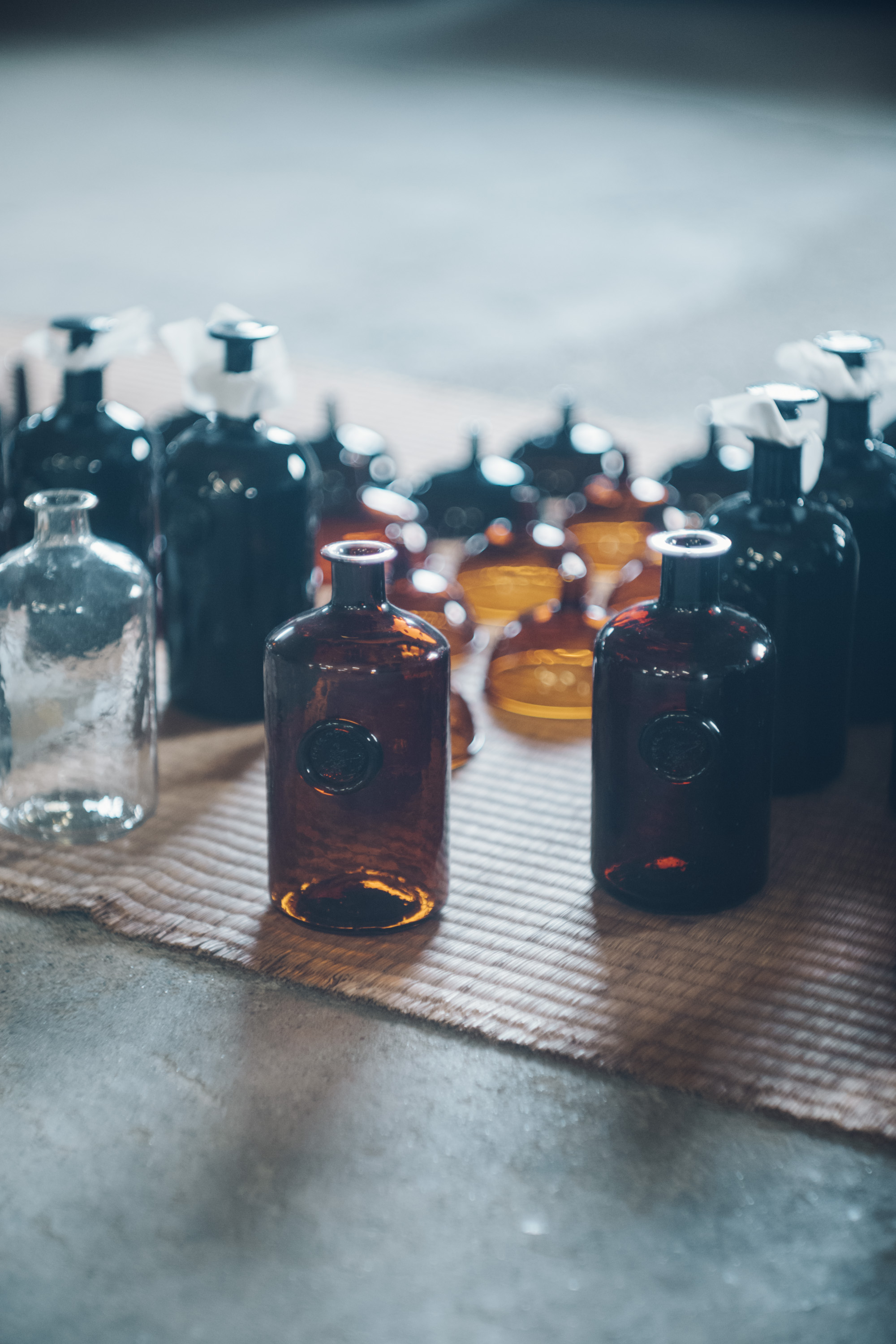
I was drawn to brown vials, so I began by researching various old ones. However, I’ve been careful not to make them too much like “vials” themselves, keeping liquor bottles in mind instead. I’m stamping the sides using a glass gather, referring to old gin and wine bottles on which the name of the brewery or owner was stamped, and this time I’ve adapted that idea by stamping the sides of the vials.
-
- I understand that there are also pieces made as a set, in addition to the bottles.
-
K
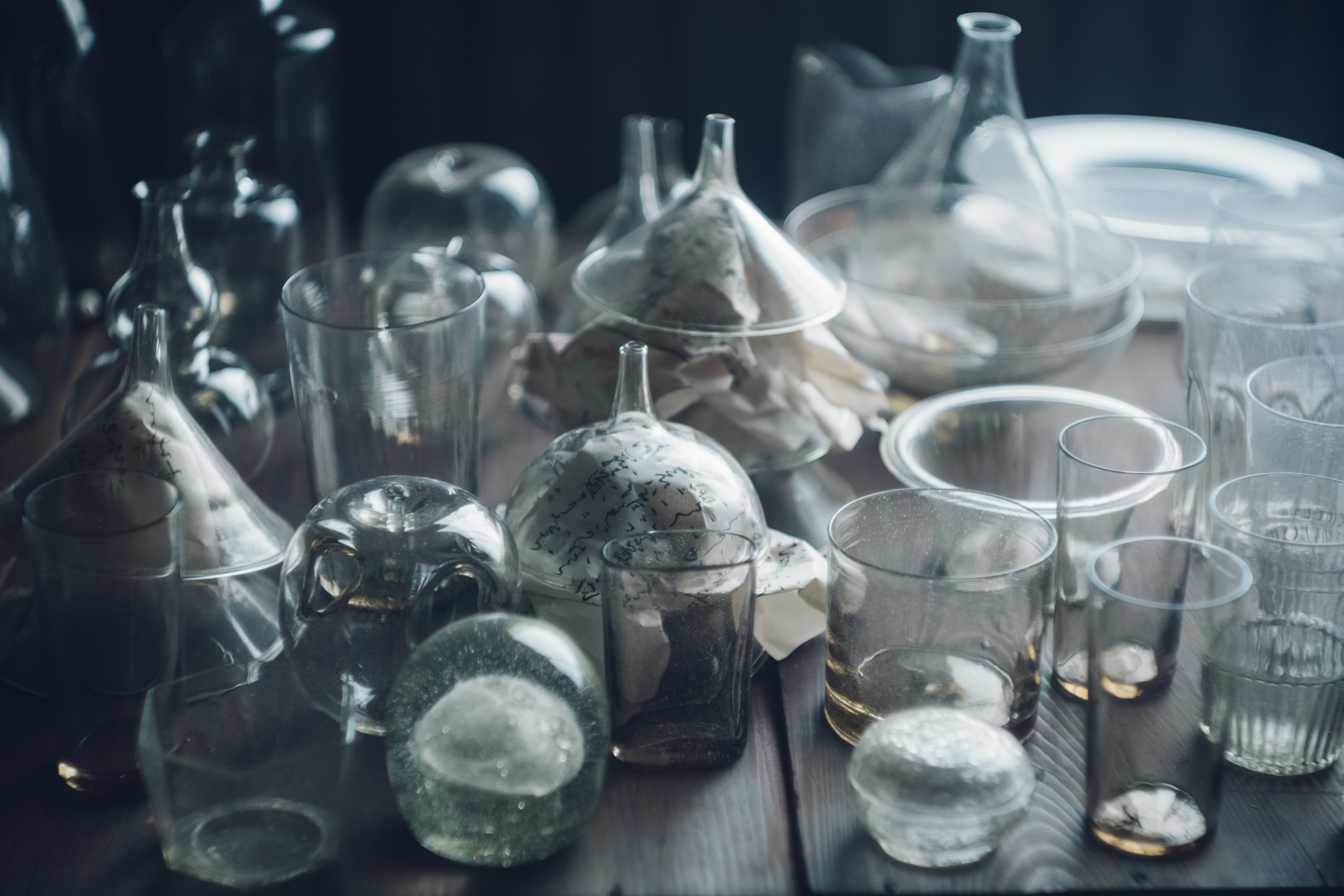
I made a bottle and a funnel for transferring gin, both in the same brown glass. To go with them, I’ve also made shot glasses, rocks glasses, and small glasses intended for drinks mixed with soda.
-
- Was there anything in particular that you found especially difficult in making these pieces?
-
K
This time, I tried making glass stoppers for the first time. I usually use a type of stopper called a shell cork, with glass attached to the cork, but many medicine bottles from that period had glass stoppers inserted directly into the bottle itself, so I wanted to try making them that way. I really struggled to get the size of the bottle opening and the stopper to match.
-
Things Imbued with the Presence of Time
- You mentioned that you take techniques from the Edo period as a model, but it seems that it isn’t only the techniques themselves that draw you in.
-
K
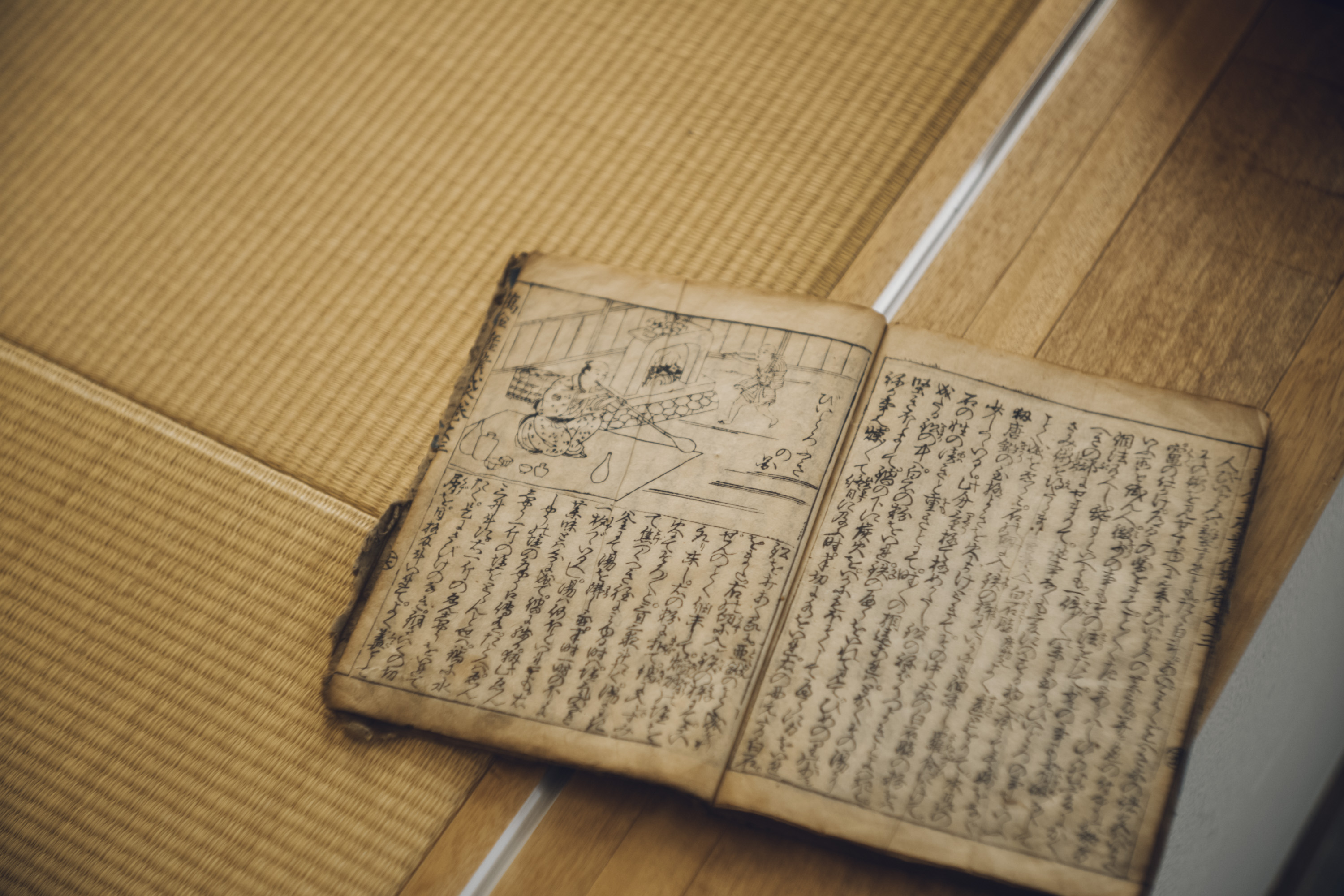
I think what draws me in is less the old things themselves than the air that surrounds them. With furniture, for example, I wonder how it would have been used at the time; with vessels, I wonder why they have this particular form, or why gold leaf was applied here. The technique I use as a model is also from the Edo period, so of course I look at the glass itself from that time, but in addition to that, I’m interested in the lives and environment of the people of that time—what kind of people made these things, and what kind of lives did they lead? As I study these surrounding details through furniture, vessels, documents, and so on, I hope to make things of my own that fit into life today.
-
- I understand that you deliberately don’t draw plans when creating a form.
-
K
If I were to draw the height and mouth diameter down to the millimeter, I feel that they would become the “answer” in my mind, so I deliberately avoid determining things in such detail. What I have in my mind is something like the air that surrounds an object. As my ideas change, I want to leave room to respond to insights that emerge later—things like the subtle nuances of a form or its atmosphere.
I have a similar feeling about how the pieces are used after they go to the customer. I feel that if I explain a vessel too conclusively, I may take away some of the room for the viewer to imagine for themselves. In fact, there are times when people use them in ways I never imagined, and that makes me very happy.
-
- You have also spoken about the value of “imbuing things with a sense of spirit.”
-
K
It’s an ideal—I would like to be able to make vessels like that. It’s difficult for me to say myself that the things I make actually have that kind of atmosphere, but I do try to keep it in mind. At the same time, there’s no point in thinking only about imbuing something with an atmosphere; in the end, I believe it’s important for the thing itself to properly stand on its own.
-
静けさの奥にある強さ
- Is it the “persuasiveness of the thing itself” that you value?
-
K
As a material, glass has its own distinctive transparency and an abundance of reflections, which can make even a crude piece easily take on the appearance of an artwork or craft object simply because it is made of glass. I feel there is a danger in relying too much on the power of the material. Even without thinking very deeply about the techniques and skills of craft, you can end up with a reasonably beautiful vessel. If it doesn’t spill water, it can function as a cup. That is precisely why I consciously try to combine craft aspects such as technique and background, and make things that are convincing in their own right rather than relying solely on the appeal of the material. While thinking about ways of expressing what is distinctive to glass, I also try not to push those qualities too far. I’m always experimenting to find that balance.
-
- How do you reconcile leaving a sense of atmosphere and room for interpretation with making something stand on its own?
-
K
Even when I say I want to leave room for interpretation, that doesn’t mean that just anything will do. I still feel that it won’t stand on its own as a thing unless it is underpinned by the craft aspects of technique and background. Rather than simply relying on the appeal of the material, while also avoiding forcing it into a predetermined mold, I have the sense that I’m constantly searching for the space between the two as I work.
-
- Do you ever feel that you’ve made something truly good?
-
K
Almost never. Even when the work is going smoothly and I feel a sense of satisfaction, the next morning, when I open the kiln, I’m only disappointed. That’s why I work with restraint, so that I don’t become intoxicated with myself, or with the things I make.
-
- How do you see yourself at this point in your life?
-
K
I do feel that I’m one of the makers living today in that continuous thread of making that stretches from the Jōmon period through the Edo period, like those we call craftsmen or artisans. But I’m not sure I feel like an “artist” either. “Artist” and “craft artist” are difficult terms for me to use to describe myself. Perhaps I would describe myself as simply someone who is making things now, within a tradition that has continued from ancient times to the present. I have always admired the words “craftsman” and “artisan,” and I would like being called one of those to be a goal for the years ahead. I also don’t want to fix glass by deciding that this is its finished form; I want to continue leaving room for it to change. I have a feeling that, beyond continuing to search for that balance while maintaining the persuasiveness of the thing itself, there is a landscape yet unseen.
-
PROFILE
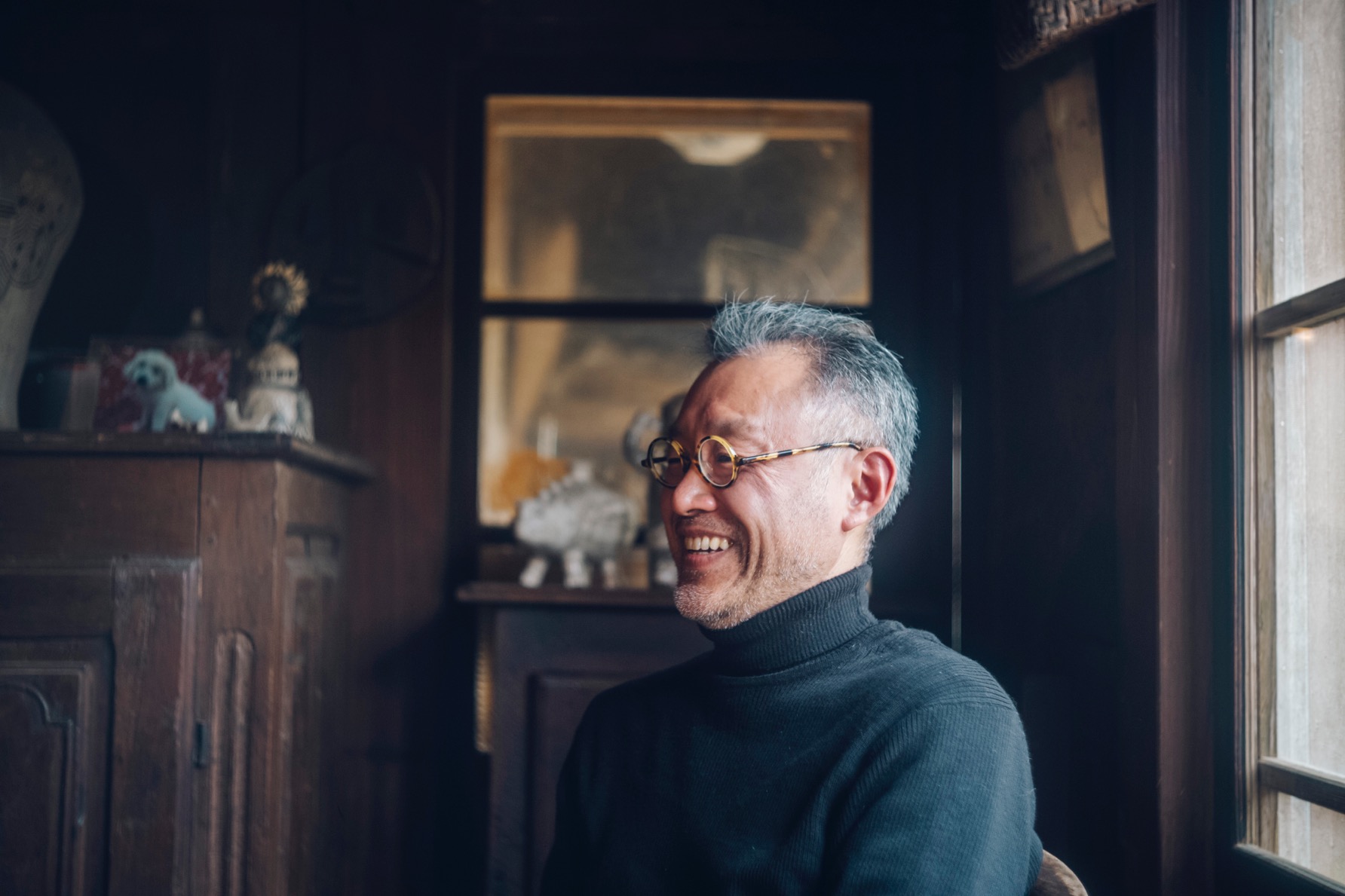
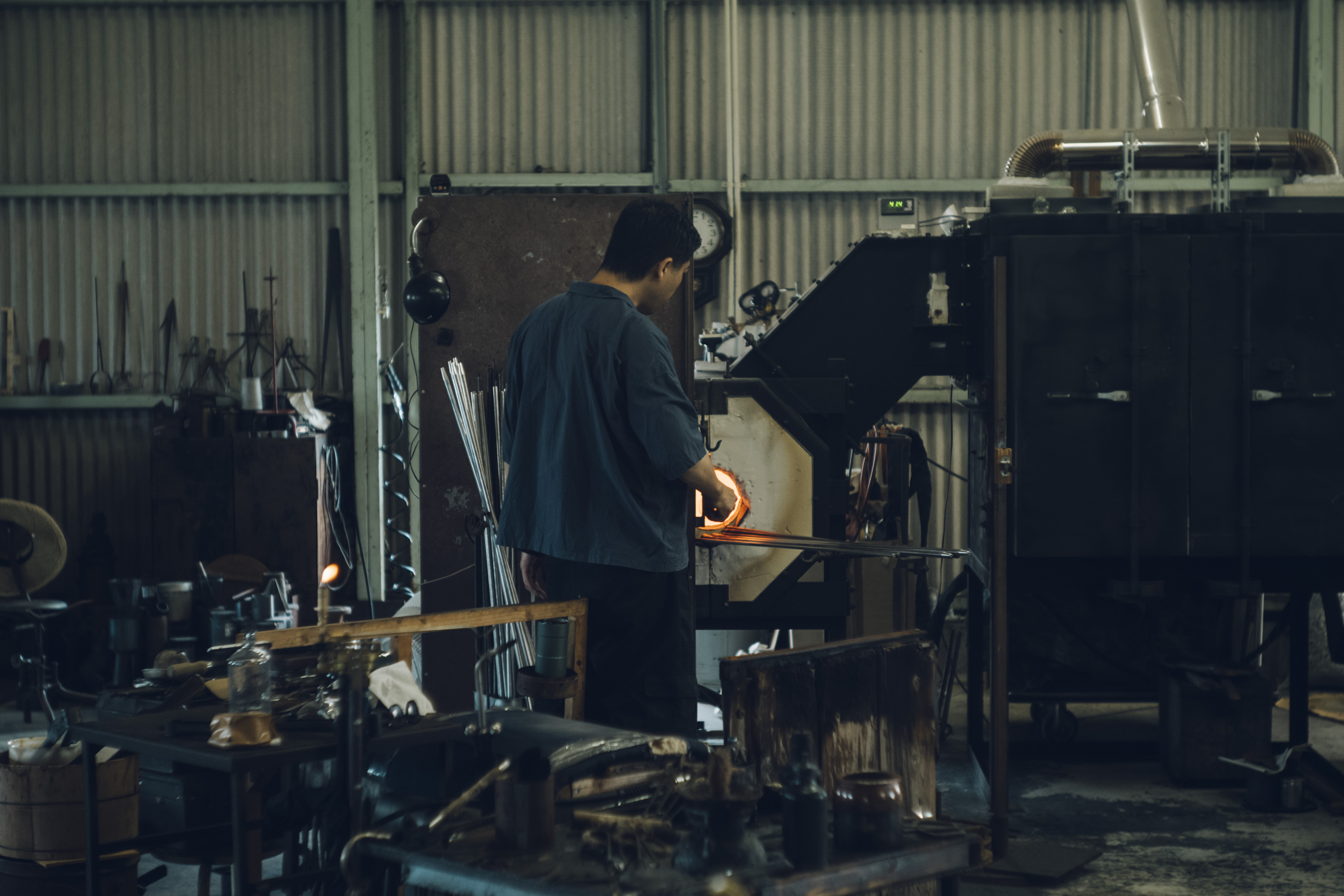
Glass artist Masao Kozumi was born in Kumamoto Prefecture in 1979. After graduating from the Toyama Institute of Glass Art, he began creating works in Toyama Prefecture in 2005. He is now based in Gifu Prefecture, where he primarily presents his work through solo exhibitions. Kozumi’s glass pieces are featured in the interior design of select ARTS & SCIENCE locations.
- ARTIST
Masao Kozumi
- EVENTS