My right hand became paralyzed in February. For more than ten years, my right arm had been painful and uncomfortable overall, with numbness as well, and perhaps it finally came to a head after I injured my neck and then my right elbow. My wife told me that, although it was my hand that was affected, the problem was really one of the flow of the body as a whole: I should keep my lower body and stomach warm, apply moxibustion wherever I could, avoid soaking in the bath, and forget about coffee and alcohol altogether. I switched to thicker socks, leg warmers, long johns, and a thicker belly warmer, and applied moxibustion one place after another: 足三里 (Zusanli), on the outside of the shin; 血海 (Xuehai), just above and slightly to the inside of the knee; 合谷 (Hegu), on the back of the hand; and anywhere on my right arm that hurt when pressed. I switched from coffee to tea for a while. I went without alcohol for one night, but then thought that completely abstaining wasn’t good for the body either, so I pleaded with my wife, and she gave me permission to have hot nihonshu.
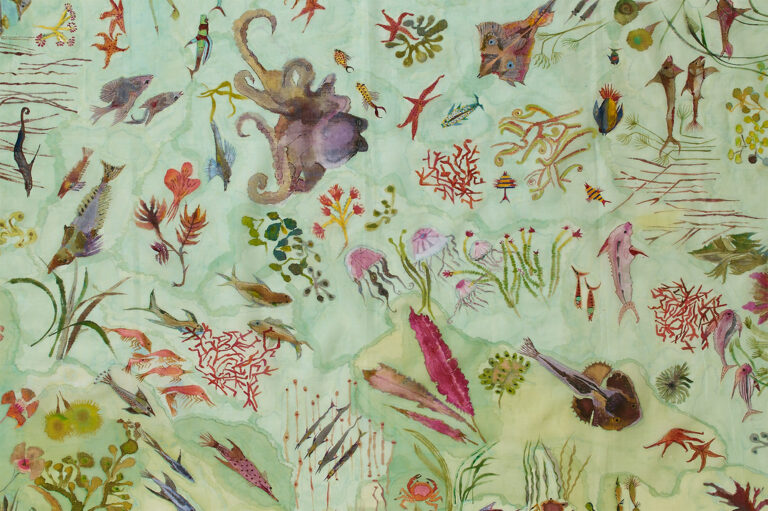
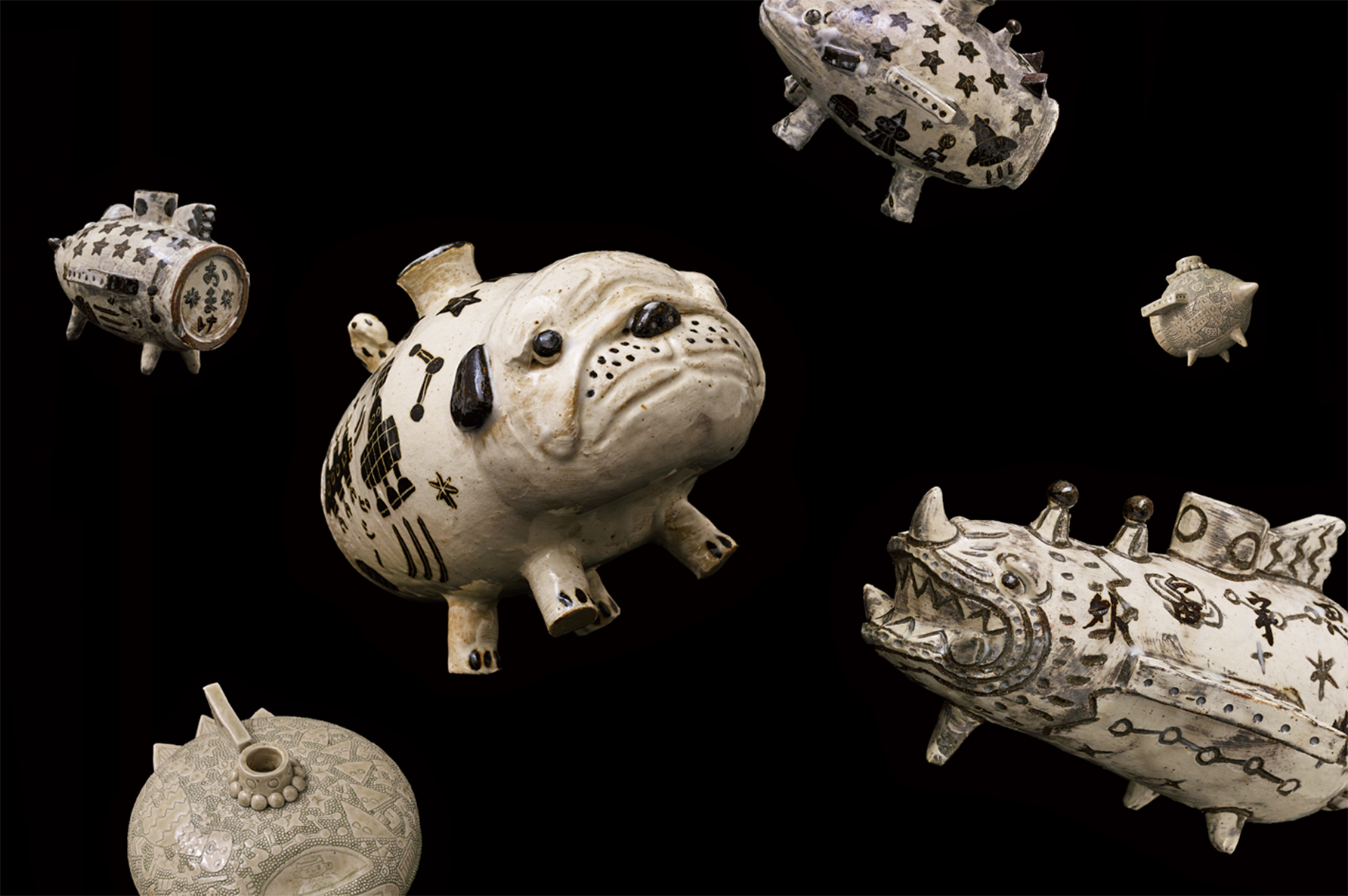
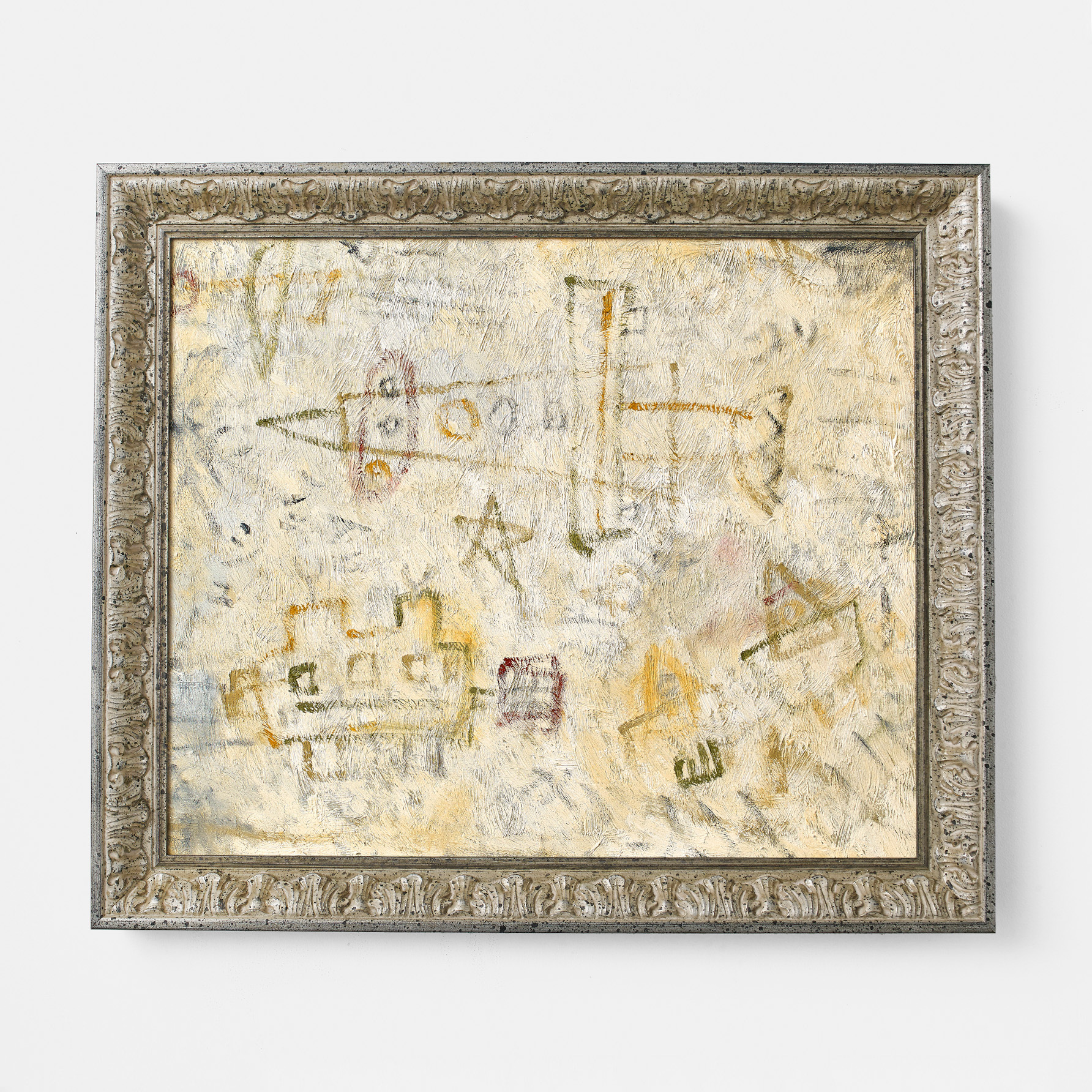
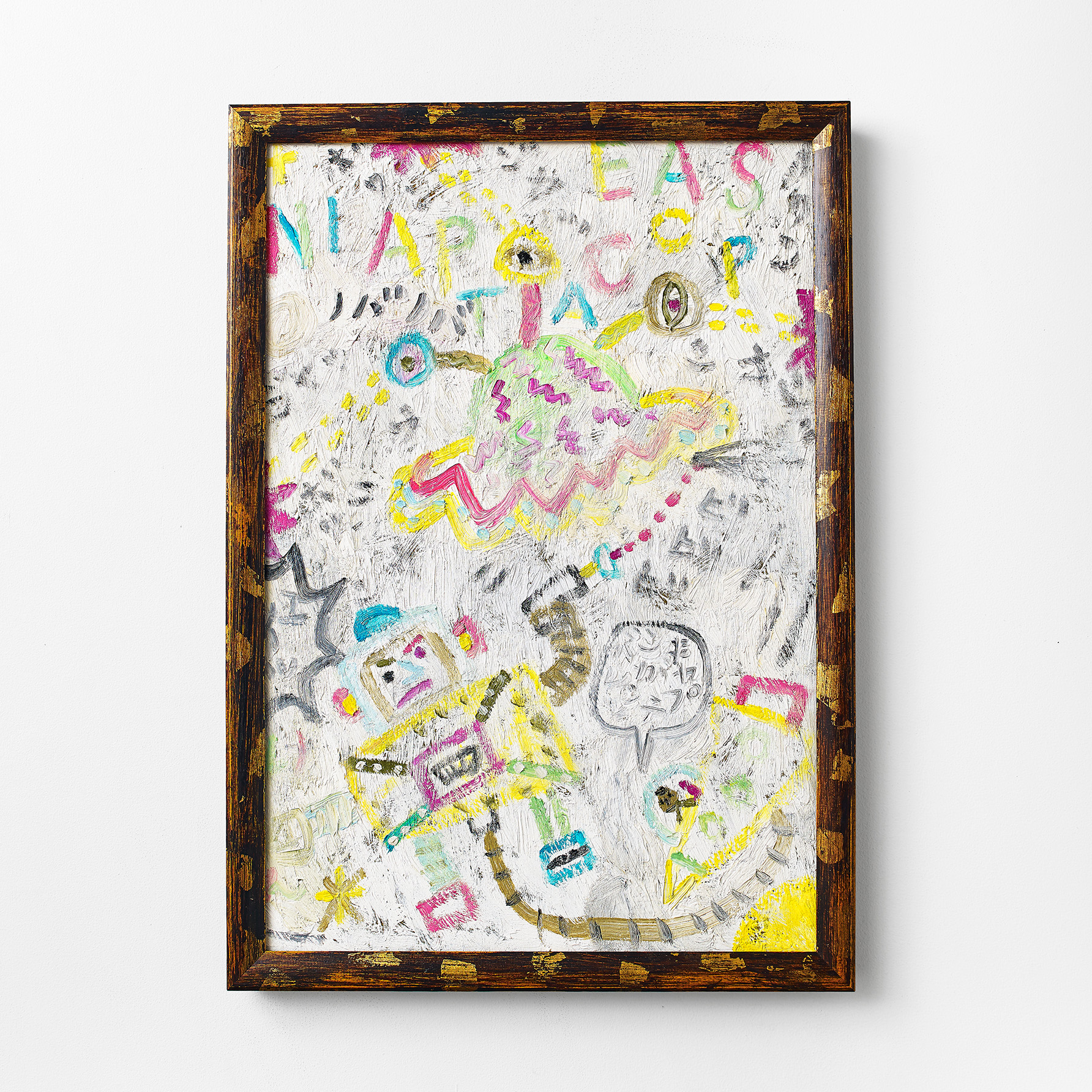
Looking back, that must have been when the paralysis was at its worst, but I took on an 80-gō oil painting. I had no sensation in the fingertips of my right hand and couldn’t put any strength into them, but I could still hold a brush lightly. For four days, I wrestled with the painting, controlling the floppy brush tip with my elbow and shoulder, and at times my whole body. Somehow, I ended up with a very powerful painting, and I was thoroughly pleased with it. The title is “Space Kaiju Wrecks Space City.” To everyone working day and night on space development, I’m sorry.
It took four months for my right hand to recover to the point where I could return to pottery work. I think several things came together to bring about the recovery: keeping my body warm; finding ways to carry on as usual with the things that had to be done every day — drawing water, chopping firewood, tending to the animals — even with my right hand not working; the oil painting; and the fact that I myself wasn’t particularly anxious about the paralysis. My wife told me that it was only moving again because the yang energy was now full and the body had become warm, and that when the yin energy became full and the body grew cold, it would stop moving again. A warning, in other words, not to get carried away.
Earlier, I wrote half-proudly about taking on that 80-gō oil painting. But when even holding chopsticks felt heavy, and trying to move them somehow left me breathing heavily from the intense pain, I went out of my way to paint a huge oil painting and then congratulated myself on having created a masterpiece. My wife must have thought, “This guy is a hopeless idiot.”
The body is something precious that we have borrowed. It is not my slave. If I continue to ignore the voice of my body and abuse it like a slave, as I have until now, the paralysis will eventually spread beyond my right hand.
Pressing the most painful spot on my right arm with my left hand, I asked my wife, “Where is this ?” In a very irritated voice, she answered, “Your liver.”
– Kenichi Takanaka